

Kapitelklicken springt direkt hin
Shownotes
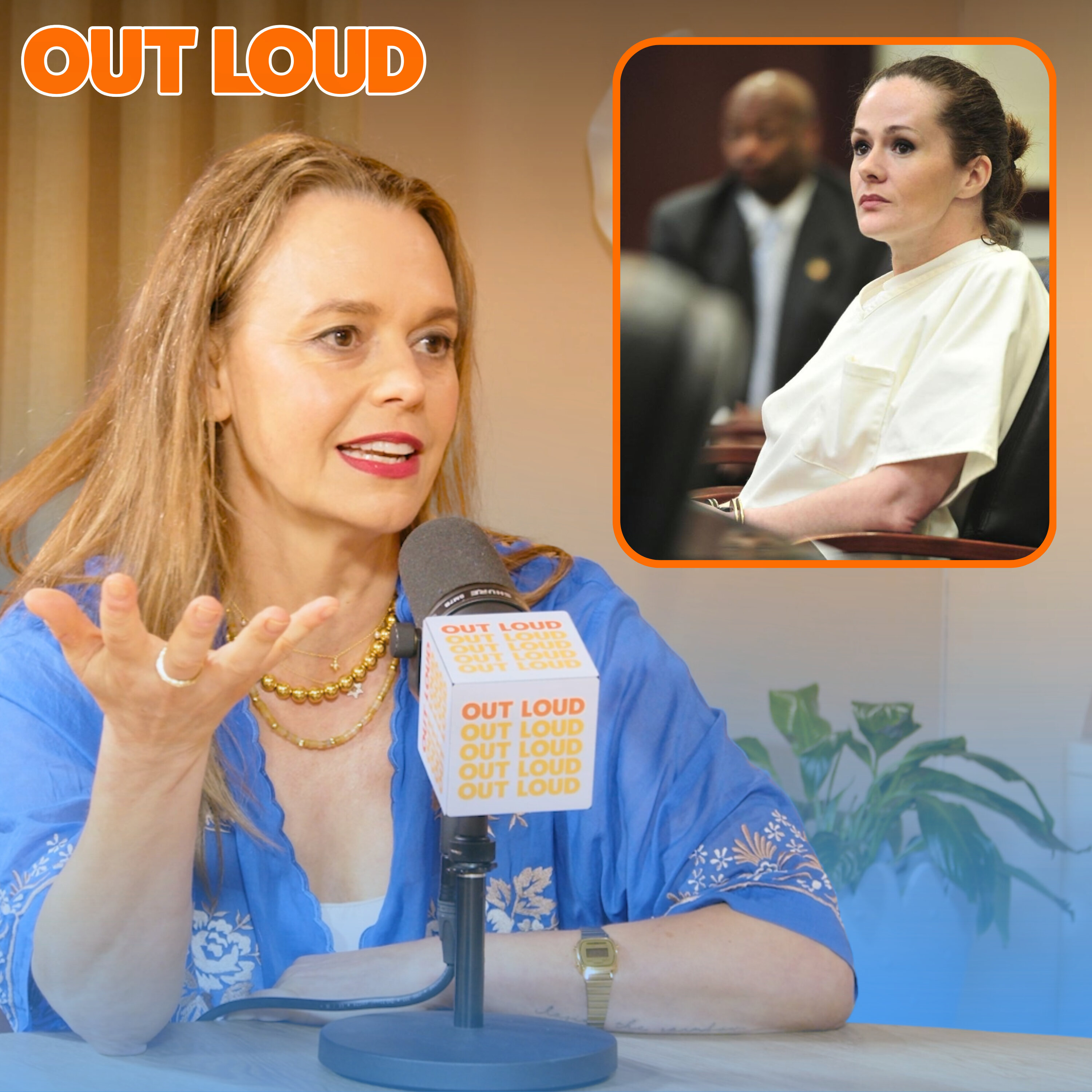
A 50-year-old woman woke up in a hospital bed last week, angry and confused, because her execution didn’t work. Jessie unpacks the Christa Pike case, and Holly has questions about the Pentagon’s plan livestream the next one.
Stand on the edge of the photo, please, so we can crop you out later. One woman has been getting that treatment from her in-laws for 30 years, and Mia, who is Jessie Stephens’ mother-in-law, wants to talk about it. Jessie is surprisingly understanding.
Also, the boss of Signal refused to play along with a BBC quickfire round, and Holly is worried our feeds have trained us to want real-life conversations on 2x speed.
And, Shanghai has put timers on its public toilets. Mia reckons she’d win.
MOVE is feel-good fitness by Mamamia. For less than a coffee a week, get unlimited access to hundreds of workouts, ranging from five to 45 minutes. Plus, you get unlimited access to everything across Mamamia, including subscriber-exclusive podcast episodes, articles, discounts and giveaways. Get your MOVE goodness here (move.mamamia.com.au/?utm_source=shownotes&…)
What To Listen To Next:
• Listen to our latest episode: Zoë Foster Blake’s 'FIBI' Rule Will Change Your Friendships & How To Buy Clothes That Fit You (mamamia.com.au/podcasts/mamamia-out-loud/zo-fo…)
• Listen: The 'Cornell 7', Fraternity Culture & 'Me Too' For A New Generation (mamamia.com.au/podcasts/mamamia-out-loud/corne…)
• Listen: Everything We Know About Sam Wood (mamamia.com.au/podcasts/mamamia-out-loud/sam-w…)
• Listen: A Pap Walk & A Pub Lunch: An Unhinged Royal Wrap (mamamia.com.au/podcasts/mamamia-out-loud/mia-f…)
• Listen: Three Rules For Life & The Worst Person In A Conversation (mamamia.com.au/podcasts/mamamia-out-loud/the-w…)
• Listen: "A Little Bit Gay" & "I Would Never Have Forgotten My Drugs": The Internet's Hunter Biden Obsession (mamamia.com.au/podcasts/mamamia-out-loud/hunte…)
• Listen: The 'Cornell 7' Snapchat Messages & Can We Talk About This Exercise Trend? (mamamia.com.au/podcasts/mamamia-out-loud/the-c…)
Get access to Very Peri, Mamamia's exclusive perimenopause series, for just $59. 25 world-leading experts, over 20 on-demand sessions, available now. We’ve sorted through the noise so you don't have to. Go toveryperi.com.au today. You hot? Same.
Check out the Mamamia Out Loud newsletter (substack.com/@mamamiaoutloud).
Discover more Mamamia Podcasts here (mamamia.com.au/podcasts)including the very latest episode of Parenting Out Loud (mamamia.com.au/podcasts/parenting-out-loud), the parenting podcast for people who don't listen to... parenting podcasts.
SUBSCRIBE here:Support independent women's media (mamamia.com.au/subscribe/?utm_source=shownotes…)
You can now watch our show in full length video on the Apple Podcast app - make sure your phone is up to date and we can't wait for you to see
Mamamia Out Loud on Apple (podcasts.apple.com/au/podcast/mamamia-out-loud…)
What to read:
• Christa Pike survived her execution. More details about her condition are emerging. (mamamia.com.au/christa-pike-execution)
• 'The cruel "rule" my mother-in-law has when it comes to family photos.' (mamamia.com.au/not-accepted-by-mother-in-law/?…)
• My Instagram reels addiction has ruined my ability to have a conversation. But can I get it back? (theguardian.com/commentisfree/2026/sep/27/inst…)
THE END BITS:
Check out our merch atMamamiaOutLoud.com (mamamiaoutloud.com.au/store)
GET IN TOUCH:
Feedback? We’re listening. Send us an email at outloud@mamamia.com.au
Share your story, feedback, or dilemma! Send us a voice message (help.mamamia.com.au/en-US/send-a-podcast-voice…).
Join our Facebook group Mamamia Outlouders (facebook.com/groups/outlouders) to talk about the show.
Follow us on Instagram@mamamiaoutloud (instagram.com/mamamiaoutloud/?hl=en) and on Tiktoktiktok.com/@mamamiaoutloud
Mamamia acknowledges the Traditional Owners of the Land on which we have recorded this podcast.
Become a Mamamia subscriber: mamamia.com.au/subscribe (mamamia.com.au/subscribe)
See omnystudio.com/listener for privacy information.
Transkriptvom Podcast bereitgestellt · Zeitmarken springen hin
Holly, the outlouders, there's a conspiracy theory. Have you seen a conspiracy theory, Mia?
No.
So you may have seen we're up in lines.
We are.
We're in the Apple store. We are on your Apple podcast page.
Yeah, I'm mad FOMO.
Yeah, I knew you would. I thought Mia's going to be really pissed because she didn't want to do, like you wouldn't have wanted to do the photo shoot on the day, but now you're like, well, I want to be up in lines.
It's true.
So.
Eagle-eyed out louders were zooming in to find Easter eggs because, you know, us and our Easter eggs.
Oh, God.
And they found something very unusual on Holly Wainwright's left ring finger. And there is a rumour going around. People are texting into Deux Moi.
I can see it right now.
Saying.
Holly Wainwright, are you married? Because you've got a ring on your finger.
Discuss.
I cannot comment on this at this time. No, of course not. I always wear a ring on this finger.
Why have I never noticed?
It's so funny that everybody.
Do you?
Yeah, I always do because, you know, you don't have enough fingers that your rings fit.
So true.
And, you know, I think when I was young, I used to be like, you've got to keep that finger for the one ring that matters. And now I'm like, who gives yeah.
It's like a dirty slide of a finger.
Yeah but the question is sometimes I wonder is like if you if you're with somebody for as long as I've been with my elderly boyfriend and you wear a ring on your wedding finger are you not actually married maybe I am.
I don't even know I'm like hang on Holly when you go out for a drink alone then how are you signaling you're single obviously I take it off okay okay I was worried I was very.
Worried Hello and welcome to Mamma Mia Out Loud. It's what women are actually talking about on Monday, the 12th of October. I'm Holly Wainwright.
I'm Mia Friedman.
And I'm Jessie Stephens.
And here's what's made our agenda for today.
Krista Pike and the story of a botched execution out of the US.
I want you to meet a woman who's going to make you uncomfortable, but at the same time make you go, yes, that's me.
And I have a dilemma about in-laws. Well, it's not my dilemma, but I'm bringing it.
It's a little bit too close to home.
For Jessie and I, and it involves family photos.
But first, in case you missed it, your time in a public toilet may be limited, literally. Now, I am someone with gut issues. We won't talk about that because TMI, but I have feelings about this. News out of China that in Shanghai, there's a timer on the outside of public toilets. So if you go to a public toilet, particularly in a busy place like a tourist attraction or whatever...
There's like a digital clock above the door that says how long you've been in there.
Oh, I love it.
And then is there anything that happens if you time out?
There is no timer. There is no limit, but it's just like a subtle shading of like, this person has been in here too long.
It's a walk of shame.
I feel like I could win.
By being in there the least amount of time?
I'm really quick.
Oh, I'm not.
That's a flex.
Oh, no.
And the thing is, and again, TMI, but Sometimes I will have to find a public toilet in an unusual place and spend a long time in there and all I do is sit there thinking, everyone out there must hate me, everyone out there must hate me. And now I know they really would.
Your worst nightmare is that you will open the door, there will be a queue of people shaking their heads going... Pointing at the clock. I'm waiting. Yep, exactly right.
In New York, they've got these new robo-toilets, which are like that, but after 10 minutes the door just opens. So they've really timed it and I would love to know how they got to that number of 10. After five minutes, there's an audio reminder to let you know you're halfway through your time. At eight minutes, there's a second warning that alerts you to prepare to wrap things up.
It's an Oscars roundup.
And then at 10 minutes, there's flashing lights activate and an automated voice announces... Attention, your use time has expired.
The door is opening now.
Okay, but I know people who have had to use public restrooms for breast pumping. I know people who have diabetes or have Crohn's or have any number of illnesses who need a bathroom for reasons that... those privileged and able-bodied among us might not even understand.
You might need to have to change a nappy.
Exactly right. You can't just go whack and open the door. I know.
It's interesting though because there are obvious safety reasons for that, right, about opening doors automatically if someone's been there a really long time, especially with three warnings. But I like the thing out of the China news story is they're saying reactions vary from some people who are like, yes, this is going to put subtle pressure on people to keep it moving, to others who say that this is poop shaming.
Well, you know, it shouldn't be time for scrolling. Also, it shouldn't be time for having sex.
Okay.
And it shouldn't be time, I mean, there are, you know, there are lots of reasons why things that people use bathrooms for that aren't bathroom related.
I think the current system, I notice it at musicals a lot, you have a line at intermission, right, and the line has 200 people in it and you go in and you have never pulled your pants off faster.
It's so true.
Because you're like, I know women are waiting and they need to wee too.
Yeah.
Yeah.
And I think that that social system of shaming works just fine because you're standing there in the line and I've got a timer going on for each cubicle and you go, oh, furthest to the right when she comes out, I will be shaking my head going, excuse me, we're all waiting. At the end of last week, a 50-year-old woman named Krista Pike woke up in a hospital bed angry and confused. She had survived a botched execution. Some background on Pike. Do you guys know? So have you guys seen this headline?
I have, but I haven't clicked on it because it feels scary.
Do you know what she did?
No, I don't know anything about it. I want you to tell me everything.
It was a pretty gruesome murder from what I understand.
That was my first question. So in 1996, so that's 30 years ago, herself, her boyfriend at the time, and a friend lured a classmate named Colleen Slemmer to the woods and the details of the case are too horrific to recount.
How old was she when she did that?
She was 18. Wow. And it was torture before murder.
Why has it taken 30 years to get to this point?
She's been on death row for 30 years. So at the time, interestingly, so that was 1996, that was the highest in US history of support for the death penalty, right? And it's really.
Declined since then. And also stories like this are so horrifying to people.
And her boyfriend at the time, who was also found guilty because he was 17- He was sentenced to life in prison because you can't give the death penalty to someone under 18, but she was given the death penalty.
Okay.
So she's been on death row for 30 years and they finally got around to it.
Yes. And this is, so this is in the state of Tennessee. And the other interesting point is that according to a federal lawsuit, which was put in a few years ago, she has spent more than 25 of those years in solitary confinement. And that is because she was the only woman on death row. So she was just completely alone. No meaningful human contact, the federal lawsuit says, for more than 25 years. And then that was kind of overturned in 2024. But then in 2026, September 30th, that was a few weeks ago, Pike was scheduled to be executed via lethal injection.
So during that time, did she appeal against death? the death penalty so that she could maybe just serve life imprisonment instead?
So based on her, the lawyers since have talked about a really traumatic upbringing, which is almost always the case in crimes like this, really traumatic upbringing, history of sexual assault. Even with the lethal injection, they requested that the people doing it be female because of her history of sexual abuse and because they need to inject her body and tie her down. And so there were provisions that they asked for with this.
Jesus.
But the actual execution, I listened to a reporter who was in the room and he was saying that so the family of the victim were there. They've been waiting 30 years for this.
And they were in support of it.
They were very much in support of it. And by all accounts, what happened in that room was incredibly traumatic. So she was strapped to a gurney. She's in sort of a separate room but with a window. And they watched the injection be administered. And then they expected that she would lose consciousness. And she didn't. She started making noises, kind of lifting off the gurney. They pulled a curtain for a minute and then they could still hear her.
Pulled it again. Another lethal injection. Again, at one point she reported pain in her arm, which is not meant to happen. And they could tell that, you know, it had not been successful. She had not died.
So the whole thing with the death penalty is quite surreal if you're not familiar with it because I saw some footage of the journalists who were there because journalists are allowed, in fact, I think have to come and witness executions. And there were journalists from a number of different publications and they were there for hours because of the failed attempts. Something about they couldn't find a vein and then what was injected into went into the tissue instead of the vein?
So what happened, they now know, is that she actually had a, like a blood clotting disorder, which they think could be part of the reason why this happened. But they went through seven different needles. They tried to find these veins. She was there saying... try my shoulder, try my, like trying to help them. By this point, you'd just be like. Oh, she was resigned to what was going to happen. And the vein that they put it in, they believe that it didn't go in there. It went into the tissue, which causes pain and means that it wasn't going to work. And so she was then taken to hospital. In the hospital.
That was surreal.
Can I just say. This idea of ambulances being called and it's like.
To save her life.
To save her life because at what point does it swap from our responsibility is to end her life to wait, our responsibility is to save her life?
Yeah.
And that's what it was. They took her to hospital. They put her on life-saving support. They expected that she would be brain dead because of what had occurred. That's why it was so shocking that at the end of last week, She woke up and she knew what had happened. She knew that there'd been an attempted execution. We don't know at this point the physical, emotional, kind of mental fallout of what's happened or.
Her current state.
No, but the fact she could speak I think was people weren't expecting that. She has since been taken back to the prison. Her lawyers are arguing for like serve the rest of her life in prison with no parole, but they're asking that they don't do this. They don't attempt it again. Because the other point of this story is that a similar thing happened a few months ago.
So a man named Tony Carruthers survived after the execution team members could only find one suitable vein for the IV and you need two. So he also, they said, we're going to give you a year reprieve. But as far as we know, Krista Pike is the only woman to have survived the actual injection being administered. Like that is highly, highly unusual for that to happen. But there's actual, there's more news coming out of the US in terms of executions. If you feel like this sense that, okay, Is the death penalty becoming more commonplace? Then your instinct would be correct. And there's another headline this week.
Yeah, the story, another one that I chose not to click on because I'm trying not to lose my mind. It was out of the US that the Pentagon says it's going to live stream the December 3rd firing squad execution of Nidal Hassan, who is the former army psychiatrist who's convicted of killing 13 people in Fort Hood, Texas in 2009. Now, you might have seen the declaration that this is going to be publicized because Pete Hegseth, who's the defense secretary, or maybe now they call him like the secretary of war or something, is saying that this is going to be a televised event. And since then, there's been a bit of back and forth about, is it really? Isn't it really? Trump has kind of come out saying, well, maybe we will, maybe we won't, which
is like, To me, it isn't surprising that he is entertaining, entertaining this because it's all about the attention because there's only really one reaction to the idea of public executions, which is like, I thought we were done with that. And also, doesn't that put the US in line with quite a lot of regimes and terrorist organizations that they oppose?
To oppose. So it's horrific news.
It's very Hunger Games.
It's it. I'm... I'm deeply opposed to the death penalty, I guess. But one of the things about Krista Pike's story that that brings up and why it's kind of an interesting ethical, one of the reasons I think it's captured people is because it is an interesting ethical issue, is one of the reasons why I've always felt strongly against the death penalty is I think there are things worse than death. And I would imagine that being locked in a cell for 30 years on your own is probably one of them. But it's so interesting that the will to to live and to keep fighting and to push and push and push seems to so often not go away, right?
Yeah, I'm with you. I'm obviously against it and to the rest of the world, to Europe, to, you know, Australians, I think we look at it and go, this is barbaric. This is so, and the US is kind of being reminded of how.
I think there have been times in the past where I've really thought there is no other punishment but this that would suffice this crime. And I think some people still feel that way, especially sometimes it feels like the justice system is so flawed.
Oh, there are some crimes you read about that are so, so horrific that you go, oh, that's made me question my position on this.
Yeah.
I think there are fates worse than death, though. I guess that's what I think. It's not that I don't think about it because I think In some cases, and again, like I'm not an ethicist and I almost feel like it's the easy option.
Isn't alcohol, though, those arguing in favour of the death penalty say it's not just about that person, it's also meant to be a disincentive for others?
And that's the argument that's being used for this public execution that may or may not happen, is that everybody tuning in to the live stream of this man being shot... which just seems incredible to say that, that a government would be, an American government would be doing that in 2026, but sure, is as a deterrent. But there is no evidence that it works.
No, and I think we imagine ourselves to have evolved beyond this, you know, public executions as I think that what that does to the society that watches it is horrific. Like what that says about human life and the irony of the Trump administration arguing about the sanctity of human life and that is why we are pro-life and we're going to restrict women's right to an abortion at the same time as so much of horrifically and barbarically ending human life on a public platform. The other thing about the live streamed execution is we're all going to stumble across it. We're going to be on our like algorithms or whatever, our children, and they're going to stumble across that.
And what that does to the human mind is horrific. That's so traumatising.
The algorithm's going to know because we've looked up Krista Pike to research this segment.
And so it's going to go, oh.
You're interested in the death penalty. Let me serve you a whole ton of content. I actually didn't get served any information about that, but a friend screenshotted it and put it in a group chat. And I kind of just thought, I don't even want to know about this. But the idea of public executions is, That's the role of the media. So the reason that the media goes to executions now is so that the state can't do these things behind closed doors. Yes. So that the media are essentially the avatars or the representatives of the public, which is the role of the media, right, holding truth to power.
Public executions are also features of authoritarian regimes.
Absolutely.
And that's what's scary. I think it's like they are not meant to happen in liberal democracies.
I have a question, though.
I know in ye olden days if– The hangman's noose, you know, or the trapdoor didn't work or the guillotine got jammed on the way down. It was seen as a sign, I think, from God and you were then exonerated and the death penalty, they didn't just go.
And fix it.
Is that the case here? Like you had your go, you tried to kill her two times.
Well, the question is about the, ironically, the kind of.
Humanitarian?
Yeah, the humanity involved in this process if it doesn't work. So there's a pause now in the state. The governor has called a pause. to this form of execution.
And what about for her? Are they just going to find a different one?
So the lawyers are just saying, I want her to not face this again and to just spend her life in prison. It is unclear what the state wants to do. That will be open for discussion. But I would think that the US, with the way that the population is going, the population is saying, we hate this, we don't want it.
Under a different regime, like Joe Biden was very much like let's stop this.
It's state by state legislation though.
Yeah.
Like there are states in America that have the death penalty and there are states that are not. But obviously the fact that the Trump administration is now flagging a public execution by the state, it suggests we're pretty clear what their position is.
Direction we're going in.
After the break, the woman whose in-laws asked her to stand in a particular place in a family photo and why it's given the internet very big feelings this week.
My in-laws don't consider spouses family. I am asked to step aside in photos and I am excluded from the group chat. After 30 years of marriage, it still hurts. What should I do?
The voice you just heard was Caroline Hacks. She's an advice columnist for the Washington Post. And that dilemma has gone viral. It's based on a letter written by a woman. For those who are new to the show, I am Jessie's mother-in-law, which is so strange. We were co-hosts before. Our relationship predates the one with my son, your husband.
And I've been thinking about this from the point of view of both a daughter-in-law and a mother-in-law, which I am. And I think With Jessie, I think it's more that you would ask me to stand on the outside of the photo for when you get divorced to get away from me.
Is that the truth, Ruth?
I think it's funny, right, because I listened to this dilemma and I saw it immediately from the perspective of the mother-in-law and I semi got it.
Really?
Yeah, I did because I thought... I have a lot of friends who have photos from weddings, events with ex-partners in them and those photos are forever ruined. How are you meant to have that framed on your wall and someone comes in and says, oh, who's that gentleman? Oh, well, he actually cheated on me and that was two husbands ago, right?
Like you don't want that on your wall.
Yeah.
So I understand asking that. the spouse to be on the edges because we can Photoshop them out.
Because it's family of origin.
Yes, the family of origin maybe being in the centre also i think you can ask for two photos maybe one with spouse and then it's also like can we just get a family of origin in case.
You guys that's very common it's very common at weddings and stuff to be like okay just family now yeah right and then and The people in the family are meant to understand what that means, right?
Or when they say, Jessie, will you take the photo?
Yes. Yes.
That's what I'm not a relative. I think it's fascinating because I think every family has a culture, right? And obviously that culture is complicated by your other culture that you come from. But some cultures are very closed. So some family culture is very closed. And some have open borders, right? So some are like, come on in. You're the new girlfriend.
You're the new boyfriend. You're that mate who's always here for Christmas, whatever. We want you in the, you know, your family, extended family. And others are very much like us against the world, closed borders. I think what's interesting is to your point about the problem with what if they don't stick around is unless the breakup was traumatic and awful and not all are, Why would you want to erase that? I was thinking about this because when I was recently going through pictures for my mom, the last photos of us as a family before I moved to Australia have my ex-boyfriend, who I was dating at the time, in them, Jack, lovely guy, and my ex-sister-in-law, so my brother's ex-wife, are in all of those pictures.
And that doesn't trouble me. Do you know what I mean? Because that's a moment in time. It's a picture in time. It captures that moment. And although those relationships didn't go on and, you know, my brother got divorced and all those things, like it doesn't mean that those photos are wrong.
Okay, so let's say the relationship did end badly.
Yeah, I think that's a bit different.
My issue is I give photos as gifts a lot, framed photos.
She's so good at that.
You're not going to give someone a framed photo. with someone's ex in it. And then you go, oh my God, take another family photo where like everyone.
Or maybe they're not the ex, but you've got the photo up and then they become the ex and it becomes a bit weird. Because also it then is about what about the new partner?
How do they feel about it? And I know what you're saying. It's like a time capsule.
And I think the key to this is is there not being animosity, but I've got the experience of having young adult children and teenagers who do have partners who come in and out of our family unit and some are there for a bit longer, some are not there for a bit longer. And with one of my children's partners, he's different with Luca because he's I've only got photos of one of his ex-girlfriends and, you know, you and he got together when he was 18 and pretty much there was no one else for him.
So I never had to face that dilemma, but I'm facing it now.
And we used to joke with one of my children's partners, oh, that person doesn't stand on the outside of the family photos, for example, at your wedding.
Did you do it like in front of that person? Yeah, yeah, yeah, yeah, yeah. Like it was an open joke.
Absolutely.
And they were joking with each other. But that's now that person isn't. within our family unit anymore. That relationship's over. And, you know, we've got photos of that person on holidays with us, like at all of these important moments. And holidays, I agree, is one thing or at an airport or something.
But weddings are kind of historical documents almost. And you never know at the time. You always think, oh, will this person be here for a while? Will they not be here for a while?
And it can be very awkward.
And often you have a gut feel about it.
I think if you're the person, the girlfriend or the boyfriend or the whatever, and it's Husbands and wives are different, but you should self-select and go, I'll take the photo.
I think so too. So I think it's about the self-awareness. There is etiquette in the self-awareness of how long have you been together? Are you about to dump them? Are you thinking about it maybe? In which case, I do the quick look around the room and I go, I am the furthest away from this photo. And then I go, I'm going to take it. And then there's that awkward scuffle with the other person who's furthest away from the family going, no, I'll take it. And it's like, no, I'm going to break up with them tomorrow. And the other person's like, no, let me take it.
This dilemma though, 30 years. What did the expert say, Mia?
Let's have a listen.
I think you should learn from these people and decide that in-laws aren't family. You have absolutely no obligation to these awful people and you don't have to put them in your pictures. You don't have to have them in your house. But after 30 years of marriage, I think it's time to accept that your in-laws have some serious issues.
Those issues don't have to be your problem anymore. And that can be a choice, just like they have chosen not to see you as family.
After 30 years, I think that's fair enough. After three months, I don't think it's fair enough. After 30 years, I think that advice is quite fair. If your mother-in-law is still not letting you in the family photos after 30 years of marriage, what's that say?
I read the comments and I think... I think I can't.
Really?
Oh, I think you'd notice. I read the comments and I think what's really interesting is that grandchildren would definitely be considered family of origin. So it's like, is there a situation where, like, you're like, let's get a real family photo.
Jessie, you take it. Luna, Harry, Margot, come over here.
Come to Nana.
Jessie, hit the camera.
Take a photo of all of us as a family. Look at us.
But it can be awkward because sometimes it'll be like, and I know with my own parents, it'll be like, Let's have one with just the children.
And does it mean the children and their partners?
No.
I'm happy to have you.
I think the partners are definitely out.
You don't want to be in any of my photos.
No, I don't want to be in any of the photos. And I do think that partners change a dynamic. We still have our siblings' dinners with the four of us with no partners because partners. change the dynamics and that's okay. You're allowed to preserve the family of origin.
I did that the other night.
I said, let's have an OG family dinner. My parents, my brother, my brother always likes to bring his partner, not like any partner, but always, even if they've only been dating for two seconds.
Nothing wrong with the partners, like.
My husband and my brother's partner is divine, but it does change the dynamic.
So I'm like, no, boundaries. She's got boundaries.
Her borders are very clearly defined.
Jessie, get out of my photo.
After the break, I need to introduce you to a very cool woman who's going to tell us a home truth about the way our feeds are leaking into our IRL conversations. I'm about to play you a viral clip from a female tech bro. She's not a tech bro. She's a tech boss. But you know, you know what I mean.
A tech sis?
Yeah, no. Who wants a female tech bro? Anyway, she's a female tech boss who I admit that I'd never really heard of. Or at least I'd not thought much about her until I saw this clip all over my feed on the weekend. You might be the same or you might be all over her, as it were. But this is Meredith Whittaker you're about to hear, right?
Yes.
She is currently the president of the Signal Foundation, which makes her the boss of Signal, which is, Mia, it's an encrypted messaging app, right? Lots of people use it because it's completely private.
Yeah. So it's the app that journalists and activists and politicians and anybody who doesn't like. Meta and WhatsApp. It's like it's a version of WhatsApp or texting, but it's not owned by Meta. It's owned by a not-for-profit foundation and it collects no data about its users.
So it's seen as much more private and secure.
And some people have issues with that because they say that the intense privacy of it allows it to be used for criminal activity. But people who are very into the idea of privacy and not getting their data harvested are big fans. Anyway, she also has worked for Google over the years. She was a whistleblower there, actually, about some tech bro business. And she's an AI expert, and she is a complete baller. She was being interviewed by the BBC's Mega Mohan. And after a lengthy sit-down interview, what Megha asked her to do, which is something that so many journos, ourselves included, would be very familiar with, is asked her if she'd do a quick-fire question round for social.
I hate those.
This is what happened. Pass, pass, pass, pass on that.
Bro culture and AI, real or rumour?
Obviously it's real. Obviously it's real.
Obviously it's real. Look.
I know social media wants this. I know you guys want this little clip.
But what the fuck?
Meredith Wittig is going to make me go home and question what I'm doing as a journalist.
Don't, don't, don't.
Question why we are mediated by seven platforms, largely jurisdiction in the U.S., that make us supplicate to a format that degrades the integrity of our expertise.
Question that, babies.
That's a fancy way of saying why are you making me work for those people that I actively don't want to work for and why are you all doing it too?
Yeah.
BBC.
I went on a journey with this because I watched the first 30 seconds or so of that video and the people pleaser in me was like, play the game. She's asking you to play a game. Like I would stand on my head if an interviewer asked me to stand on my head, which is a character flaw. But then I kept watching it and that line at the end nailed it and I just went, I love that she went, I know we've all got to play this game but I'm actually going to refuse here because you are reducing me to a soundbite. We have all experienced having our words taken out of context. We've been clipped.
We'll probably be clipped saying this right now. I've done interviews where I have been unfairly clipped And so she clearly. Was just going, I've had enough of it and I've so respected it.
Explain what clipping means.
Clipping is now how every piece of content in the world is distributed, which is that if it's a podcast, if it's a film, if it's a TV show, if it's a conversation, if it's a panel, it's they will clip what you said into really quick soundbites, so maybe 30 seconds. Matt, you wouldn't do more than two minutes.
No one will listen to that.
It's all for short-form video.
Short-form video.
So it's for Reels, for TikTok, for YouTube Shorts.
It sort of.
suggests that every piece of information can be condensed into two minutes.
We do it to ourselves. We have to.
We're doing it right now.
We're doing it right now.
It's what business requires of you now because of the tech platform. Yeah.
For real life people, people who aren't in the media though, there are real life implications of this too. And they were very well expressed, I thought, in a column in The Guardian this week by British writer Hannah Ewins. Now, She was saying, and it's funny because when I read the beginning of this, it rang so many bells for me, but not in a good way. She said, recently I was mid-conversation with a stranger at a party when I suddenly became conscious of my internal monologue that was going, yes, hurry up, get to the point. You're going to say this, then you're going to say that. What's the takeaway here?
I'm thinking that now.
Exactly.
I know you are.
Get to the point.
She becomes impatient, she writes, with anecdotes that meander. with stories she's heard before, by ponderings without takeaways. And she says she knows why. It's Reels and TikToks and Reels. Being someone who spent a lot of her day on Instagram, she's been conditioned, she says, to expect information to be delivered to her in a very specific way. Subconsciously, I had begun to expect conversations to provide speed, relevance, and the ability for me to skip through at will. A friend told me she got addicted to Reels and now she can't bear irrelevant information in conversation. And it was even better when another said it would be nice to be able to skip through and speed up interactions in the way that you do on the internet. That is true.
It is messing with our ability to have real life conversations. Does that ring bells with you too? I hated this.
Uh, I have had this instinct. You know how on TikTok, I don't know if you can do it on Instagram, you can speed something up to two times speed. Can you do it on Instagram?
Yeah.
Oh, okay.
I have always been like something about this move.
With my forefinger.
You can do it on Spotify.
You can do it anywhere.
Oh, on your podcast.
We always get complaints that we sound drunk and it's like, no, you've just put us on two times speed by accident. Every time I go to do that, Some bell rings in my head and I go, this is bad for my soul. This is not how we're meant to consume information. Listen to it at the speed in which the person spoke with their pauses and their mistakes. I know that's bad.
My kids who are Gen Z and now like sometimes they'll find themselves while someone's talking, like their hand.
Will go up.
Do they do it on your forehead?
Yeah, to try and go two times speed. I hate that.
Hate it.
So do I, but I do it. I can see that it's very bad for me and my soul and my life, but I also can feel myself doing it.
Guys, welcome to my brain.
This is just default state for me. Always has been.
See, I didn't relate. I read the article and I thought, okay, there's a few reasons why. The first is try and get a three-year-old to get to the point.
You can't.
Any child really.
Any child. So a child... Children are an exercise in boredom and they're really good at strengthening your muscle of just like a lot of time with no headlines, no point.
I wonder if that'll stay the case. Because, you know, kids tell long, boring stories, right? I mean, lots of people tell long, boring stories, but kids particularly. And I wonder if that will change and they will stop telling the stories in a long and boring way because of the.
Quick, Oh, my God, they'll start speaking really fast.
Oh, that's horrible.
There's a lot of comments actually that we've all started speaking faster and I think that that's true. I think we've all started speaking faster to fill in the gaps, to kind of have our own, our attention spans are so fractured and we're context switching constantly. And I also think, and this is a really obvious thing to say, reading books is the antidote to this because it lets you sit with an idea for long enough. The thing I have noticed that wasn't brought up in this article is my memory. My memory is shot because in order, for example, the Krista Pike thing, right? I have watched so many reels on that. I've listened to podcasts. I sat down to prepare for that segment. Do you think I had
one detail top of mind?
No.
I had to go and get it all because my mind knows it doesn't have to save anything.
The danger of all this, right, is that, and we do it, is that we are mostly confused. consuming conversations online that are fake conversations right so even this conversation that we're having we're very good at this we've been doing it for years if i say so myself but what i mean is like we'll prep for this so there'll be things that we know we want to bring to a point we we have a general idea of what we want the vibe to be of the conversation and then we have the conversation right real life conversations aren't like that as she writes in this The best conversations are nothing like content. And that is true. Real conversations meander, go off down weird anecdotes, make you go, oh, that makes me think about this. And then connect those
things or that book I read once or da, da, da. And it like takes you in lots of places. And that's why often when you've had a really good conversation with a friend or that's deep, you leave feeling really satisfied.
Yeah.
And maybe that's more, we are listening and watching so much conversation that is basically professional conversation delivered by professionals. So now we expect our auntie and our mother-in-law and our three-year-old to speak like a professional.
And in saying that it's not conversation, it's entertainment and conversations are not entertainment. If I'm having a conversation with my husband or my sister or my family or whatever, it's it's awful being in a social situation with someone who's trying to deliver a stand-up monologue like that's awful or have like a beat or kind of occupy the majority of the conversation it's there is a boredom and I think you're allowed to be bored and let someone else tell the same story that they've told three times but it's a it's a muscle like I think we have to work on it.
I want to know if this is your brain and it always has been.
It's so interesting because I'm waiting for you guys to ask me a question.
Yeah.
And this show is a microcosm of that as well because, like, everyone's monologuing and everyone on the internet is monologuing and there's– And that's what I think texting and the way we live now about asynchronous communication where even leaving a voice note for someone. I don't want to have a conversation.
I just want to monologue at you. And so everybody monologues and it becomes a series of monologues. And even in a conversation, someone will just be waiting for you to finish a so that they can say what they think.
So i want to know because i was going to ask you a question but i was also waiting for you to give me a signal because we're professionals but because my question to you is you said at the beginning that's how my brain has always worked right it's like i would like to fast forward this boring man at the dinner table please like we as many of us would so do you like in a way is it good and better for you that like this is the this influence of the speed it up, the highlights, real conversations? Do you find it more satisfying?
It's a great question, Holv.
Thanks for asking it.
I like it because it's more efficient.
So I don't like it in myself because the feeling of wanting someone to hurry up and get to the point is awful. But I'm hoping that other people will get to the point a little bit. The other time that it can be really awful to feel that way is when older people are talking to you because... they do take a little bit more time. The other reason I think we're frustrated is because we rely on our phone a lot. So I was listening to a David Sedaris interview and he was talking about going to somewhere and the host said over this long weekend on the ground level, which was all the communal areas, no phones, tablets, whatever.
And he said, because everybody there was Gen X and it meant that the conversations took a lot longer because it's like, what's that movie?
Do you remember that time? Wait, do you remember that guy? And he said, that is a part of your brain that we've just lost.
It's interesting because I know what you mean about efficiency, but I think that the the push for every conversation to deliver itself like content also means it feeds into that idea that we all have to know what we think about things all the time. Because what's your hot take on this thing that's happening right now? Whereas really, curiosity and conversation should lead you to all kinds of places.
But it's like, no, my reels tell me that you're going to give me the facts and then tell me what to think.
Meredith Whitaker from Signal, also what she said about this is just the devolution of expertise.
Because so many things require nuance. It's like tech bros, good or bad.
Yes.
Like death penalty, yes or no.
Exactly.
Yeah, the questions were about like existential threats. And it's like I refuse to even dignify that yes or no rapid fire question with an answer when I know that my expertise, this is the irony of you sit with anyone who's a real expert in something and ask them a question you think is simple.
Right.
And they will complicate it for you because that's what intelligence actually is. Whereas someone on Instagram will have you believe that in these three points, you can understand everything there is to know about neurosis. And that's not true.
And it's what I love about podcasting in this podcast in particular is that I often don't know what I think until I hear you guys talk about it and we talk about it together. And then by the end of the segment, I'll change my mind. And that's what a lot of outlouders tell us.
It can't be.
Distilled into a 20 second soundbite or a yes or no answer.
That is all we've got time for today, Outlouders. Although, before we go, I need to remind everybody about Move. Have either of you two seen me doing weights on our Move app?
I do weights with you.
You have been meaning to. With me?
Yeah, I do weights because we have to lift heavy things.
We do.
You'd be better at it than me.
And I love doing it with you, Hope. It makes me feel closer to you.
On the Move app, Mama Mia's Move app, which is our exercise app, which is Fantastic. You don't need fancy equipment. You don't need fancy clothes. You can do it anywhere, whatever. There's a series of weights with the fitness expert Chantal Eckerman, who I love because she is like a grown up woman who's got smart advice about this stuff. Obviously, she's an expert. And we've got this weight series. I've been trying to do it three times a week. It's really good.
It's really accessible and easy. And I just wanted to remind everybody out there that there is a female-friendly fitness app.
We will put a link in.
The show notes too if you want to do some weights with me.
It also has really good maternity, like pregnancy workouts, the some that I appeared in, and postpartum because they're very specific. You've got to be careful with your exercise during that time and they are so helpful.
There's like gentle stuff, vigorous stuff, dance workouts, Pilates, a real range.
We're all in some of the videos. Sometimes I work out with you, Jessie. Sometimes I work out with myself.
In my leggings.
Yeah.
So please come join us. We would love that. We'll put a link in the show notes to move.
And we will be.
Back in your ears tomorrow.
Goodbye.
Bye.
Mama Mia acknowledges the traditional owners on the land on which we have recorded this podcast.
