

Im Krisenmodus· Folge 157
Posad-Pokrovske: Rebuilding Under the Shadow of Russian Drones
Mittwoch, 24. Juni 2026 · 21 min
Kapitelklicken springt direkt hin
Shownotes
This episode was made with AI.
Posad-Pokrovske, near Kherson, was meant to become a symbol of Ukraine's reconstruction. When Jan Jessen visited the village a year ago, new houses were still little more than shells and hopes for the future were high. Today, many homes have been completed, families have returned, and children are once again playing in the streets.
But the war has not gone away.
FPV drones are once again targeting gas stations, shops and other civilian locations. Residents speak of renewed fear, inadequate protection and the challenges of everyday life.
In this episode of Im Krisenmodus, FUNKE war correspondent Jan Jessen talks to people who stayed or came back. They speak about rebuilding and loss, about missing infrastructure, and about why they refuse to abandon their home despite everything.
A report from a village caught between hope and danger – and about what reconstruction really means in the midst of an ongoing war.
Voices Featured in This Episode
Oleh Dolholutskyi (41), founder of the initiative “More Action, Less Talk”
On grief, security gaps and protective nets that are still lying unused because there are no poles to install them.
Ivan, attendant at the Ukrnafta gas station
On the nighttime drone strike and the first fragmentation vest he has ever worn.
Vadym
On daily life under the threat of drones and kamikaze attacks.
Volodymyr Mikheiev (62)
On crumbling infrastructure and why military vehicles should not park directly outside the village store.
Lena
On the journey from ruins to the sound of children laughing – and why rebuilding may take another decade, if support continues.
Oleksandra (“Sasha”)
On home, belonging and the decision to raise her family in the village.
Vasyl Rakovskyi
On the park, the children and trees taking root in bomb craters.
Svitlana, council member in the settlement of Promin
On the mobile cinema project and giving children brief moments of normality.
Host
Jan Jessen
Political Editor-in-Chief of NRZ and war and crisis correspondent for FUNKE Media Group.
Episode Guide
1 | Back in Posad-Pokrovske
A year ago, the village embodied hope and reconstruction. Jan Jessen returns to ask: what has become of those hopes?
2 | Life Under Drones
Gas stations, shops and roads are once again coming under attack from FPV drones. Residents describe how they cope with the constant threat.
3 | New Homes, Old Problems
Reconstruction is visible. But many people still struggle with inadequate infrastructure, unreliable water supplies and a lack of protection.
4 | Why People Stay
Despite war, fear and destruction, families are returning. Residents explain why they refuse to give up their home.
5 | Cinema on Wheels: When Children Laugh Again
Parks, film screenings and new gathering places are giving children back something the war has taken from them: a sense of normal life.
6 | A Village Between Hope and War
Posad-Pokrovske is changing. But the attacks continue. What will it take for reconstruction to mean more than simply building new houses?
📬 Contact & Feedback
Questions, criticism, or suggestions? Get in touch:
✉️ krisenmodus@funkemedien.de
🟢 Subscribe Now
Im Krisenmodus – available on all major podcast platforms:
Spotify (open.spotify.com/show/0IQW1w25NYSrz60aAPzwvB?s…) | Apple Podcasts (podcasts.apple.com/de/podcast/im-krisenmodus/i…) | Deezer (deezer.com/de/show/3737197) | YouTube (youtube.com/@Krisenmodus-Podcast_FUNKE)
📅 New Episodes
Every two weeks, Wednesdays.
In Crisis Mode is a podcast by FUNKE Media Group.
Transkriptvom Podcast bereitgestellt · Zeitmarken springen hin
Die Übersetzung von Jans Stimme vom Deutschen ins Englische wurde mit einer KI erstellt. Für mich ist es auch ein innerer Angst. Ich habe auch ein innerer Angst, weil meine Familie hier ist, meine Kinder hier sind. Ich sehe, was passiert um uns, besonders was zwei Tage vorhin, wenn ein Drone struck a store.
Ich sehe, dass ich wieder eine Negliganz auf die Polizei, die Militär und unsere Autorität sehe. Nobody seems to be thinking about security, and nobody is even taking basic steps to protect important locations. I have returned to Posad-Pokrovska once again, this small village in southern Ukraine, situated between Mykolaiv and Kherson.
When I was here last year, I left thinking of it as a village of hope. Now I am back. New houses have been built, roads have been repaired, but while I have been here, drones have struck repeatedly, and so Posad Pokrovsky has become, for me, a symbol of life in Ukraine itself, a life lived between hope and fear.
In Crisis Mode, the podcast from Conflict Zones with Jan Jessen. Hello, I'm Jan Jessen, war and crisis correspondent for Funke Media Group. You can find my reports in NRZ, WAZ, Berliner Morgenpost and Hamburger Abendblatt. I'm back in Posad-Bokrovské. Many of you already know this place. We have featured it several times on this podcast before and will include links in the show notes. Als.
Ich sagte, ich sagte, aber einige Hundert sind seitdem zurückgekehrt. Ich erinnere mich an unsere erste Besuchung zu Posat-Pokrovska in dem Jahr 2022. In fact, wir waren nur durch den Weg nach Kursen. Aber ich habe die Leute leben im Hintergrund. Was mich struck, dass die Leute zurückgekehrt waren, die etwas mehr als eine Landschaft von rubbel geworden sind. Since dann, wir haben diese Stadt und einige von ihren Residenen genommen, zurückgekehrt von Zeit zu Zeit, um zu sehen, wie Reconstruction ist und was die Zukunft der Zukunft sehen.
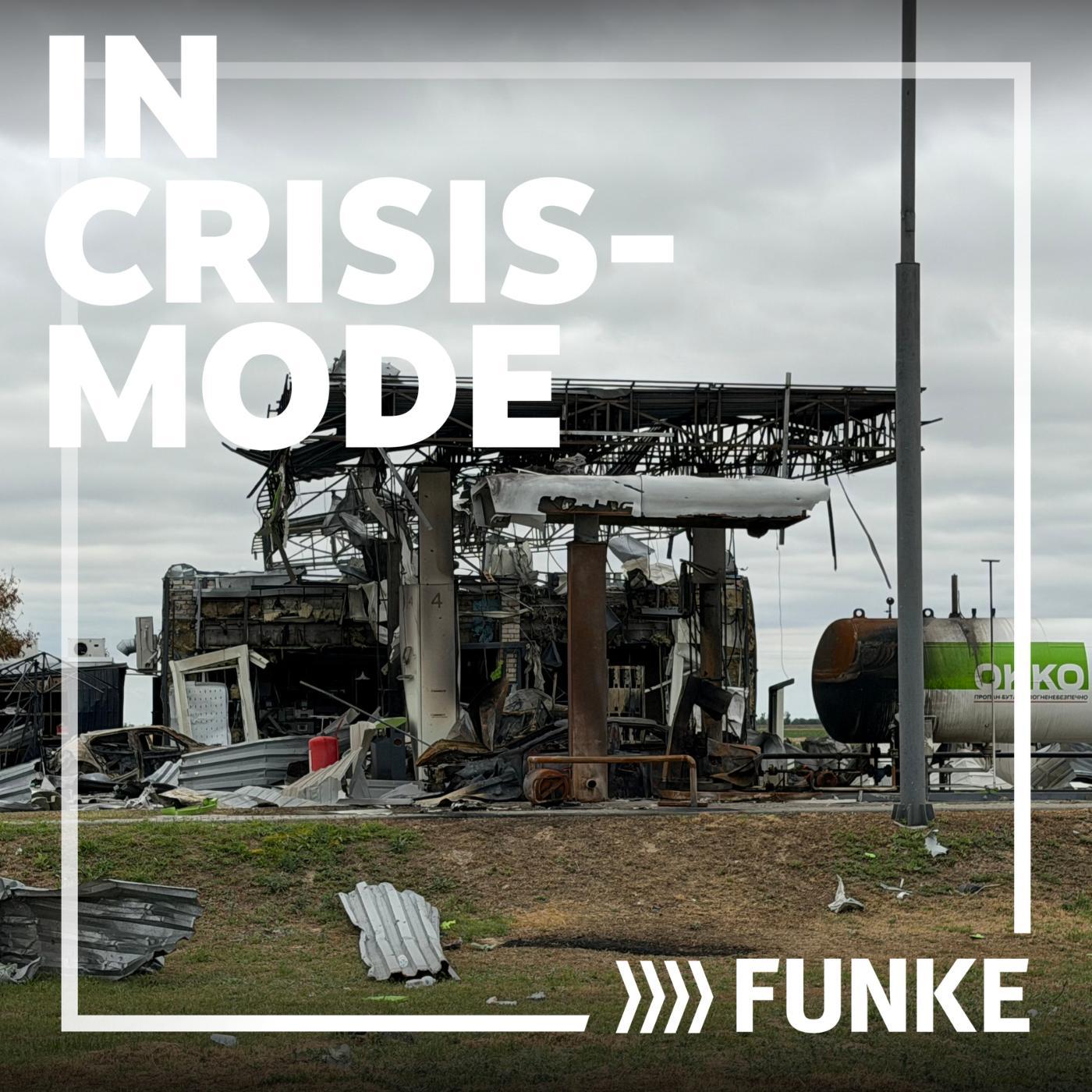
When I came back this time, though, I immediately sensed that the mood had changed. Posad Pokrovska is once again within range of Russian drones. The contrast was surreal. On the one hand, there were children playing in a park, a remarkable and hopeful project that we will come back to later. On the other hand, I found myself standing at a gas station we had visited countless times before, and that gas station had become a ruin.
On June 5th, a Russian Shahed, or Geran, drone struck it. Four people were killed in the attack. One of them was a woman I knew. We used to stop there often for coffee and hot dogs. One of the saleswomen I had come to know over the years was killed in the June 5th attack. And it was not the only gas station that had been hit.
While I was in Posad Pokrovske, the village's second gas station also came under attack. The morning after the strike, I spoke to Ivan, the attendant. He was standing on the forecourt, while workers had already begun repairs. Ivan was wearing body armor, more precisely, a fragmentation vest. It was the first time he had ever worn one. And somehow, despite everything, he is trying to keep everyday life going.
In the middle of the night, an FPV drone hit the canopy. Shrapnel flew across the station, but thank God everyone survived. Wir werden die windows mit OSB-Paneln und alles gut sein können. Die Gas Station ist operatet als usual. Die FPV-Drones Ivan ist mit der kleinen Kamikaze-Drones. Sie haben nicht eine sehr lange range, vielleicht über 20 km.
Aber sie haben Explosive-Charges und sind direkt in ihre Targets von Operatoren. Was ist neu, ist, dass die Russen jetzt Molnir-Drones benutzen. These are also kamikaze drones, but cheap fixed-wing devices made from aluminium tubing and plywood. They are crude and inexpensive, costing around $500 apiece. But they have a greater range than conventional FPV drones.
That is probably one of the reasons why Posad Pokrovsky is being attacked again. The village is actually relatively far from the front line, more than 30km away. But these Molnir drones are now evidently reaching the village and striking targets there. The Shahed drones I mentioned earlier, known in Russia as Geron drones, are long-range drones with much larger warheads than FPV drones.
It was one of those that completely destroyed the other gas station. Ivan was lucky in a way, but he told me that all gas stations are effectively marked as red dots, potential military targets, and he admitted that he has no idea what will happen next. Perhaps his station too will be struck by a Shahed or Geron drone and destroyed, but with a kind of fatalism he simply said, These things happen, and it is not only the gas stations that are being attacked.
On the morning I arrived in Posadpokrovskoy, the village store in the centre was hit as well. It is just a small corner shop, the kind of place where people buy their everyday necessities. When I got there, the damage was still plainly visible. All the windows had been shattered and had since been replaced with plywood sheets.
Shrapnel marks were clearly visible on the shelves and throughout the building. The facade itself was scarred by the blast And what struck me, much as it had with the gas station Was what happened next One of the saleswomen had been injured and taken to hospital, Yet that same evening, people cleaned up the damage And the next day, the shop reopened Because people need to buy groceries And because giving up is simply not an option, Vadim works alongside Oleg, whom you heard at the beginning We have spoken about Oleg several times on this podcast Together with friends, the local resident founded an initiative called More Action, Less Talk.
Over the years, they have carried out countless reconstruction projects. Vadim is one of the volunteers, and he speaks with remarkable calm, without any drama. My name is Vadim, and I have been living in Posad Pokrovsky for the third year, since 2024. What can I say? Over the last few months, and perhaps even the last few weeks, the situation has not been very good.
Drones and Shahed drones continue to fly over the area. And unfortunately, there have already been incidents that resulted in fatalities. But overall, we are somehow managing and carrying on. It is something you encounter again and again across Ukraine. A kind of resignation to fate, a certain fatalism.
People know they are living in danger, but at the same time they tell themselves that life has to go on. Yet in Posad Pokrovsky, you can also sense something else. People are increasingly frustrated with their own government. Part of that frustration stems from the fact that Kiev made big promises when it came to reconstruction, but so far relatively little has materialized.
To be fair, some progress has been made. Around 100 new houses have been built, some of them with state funding. But I think people had expected much more, especially since President Zelensky himself visited the village and made major promises to the residents. And that is what concerns Oleg as well.
He is critical of the authorities and says they are not doing enough to protect the village, particularly its vulnerable and strategically important sites, places like the local store or the gas stations. We can help provide protection, for example, along the central streets. Wir können schon schon helfen, wie Stores und Gas Stations zu unterstützen, die sich schon seit langem vorhanden haben.
Aber für einen Fall, niemand denkt darüber, dass das nicht. Die incompetence von unseren Autorenzen ist sehr gefährlich. Overall, however, wir tun alles, was wir können. Und ich hoffe, dass alles alles gut wird in der Ende des Endes. Es ist eigentlich ein relativ einfaches Mittel, das jetzt in den Frontline-Towns und Villages across Ukraine. Nets.
Sie sind benutzt, die sogenannte Net-Tunnel, die bereits in den Kursen sind, in den Kursen, und jetzt über die Straße und über ihre Seite. Diese MESH-Structures sind nicht die Begründung gegen große Schahed-Drones oder Ballistik-Missiles, aber sie sind effektiv gegen FPV-Drones, sie unterbrechen und reduzieren die Kraft von Explosionen.
Sie schlusser Leben, und sie sind eine sehr effektive Lösung. Oleg himself hat ein sehr vieles Nets bekommen, für seine Initiative durch Donations von ein Norwegen-Organisation. Aber was er braucht sind Arbeitsplätze, und die Polen mussten sie erect und bauen diese Protektive Korridors. Und das ist was frustriert ihn. In seiner Meinung, die Autorität sind einfach nicht genug zu schützen.
Ein weiteres Problem, Oleg, ist etwas völlig anders. Als ich schon erwähnt, sie sind bereits zu finden, die Arbeit zu finden. At der moment, large numbers von Menschen, die Militärin sind, die Autorität sind, die Autorität zu verhören. As a resultatio, Oleg und seine Freunde sind immer weniger von volunteers für ihre Initiative. Das ist auch ein growing Problem und ein source von Kritikismus.
People complain about the so-called TCCs, the Territorial Recruitment Centres, which many accuse of using heavy-handed methods, picking men up, taking them to training camps, and then sending them straight to the front. But Oleg has continued his work, regardless. Over the years, his initiative has laid water pipes, repaired roofs, and delivered humanitarian aid to neighbouring villages and to vulnerable residents in Posad Pokrovské itself.
Ein Projekt in particular struck me as remarkable. Sie haben ein mobile Film gebaut. Using ihren Bus, sie fahren in die Stadt mit einem Bildschirm und Projekte, die Kindern die Chance zu sehen, zu sehen. I joined them in Lutsch, a village just outside Posad Pokrovské. Only 230 people live there, including 16 children.
And I saw it for myself. Some of the children had come, and they were absolutely delighted. They were genuinely enjoying the screening. And that is exactly what Svitlana, who works at the local cultural center where the event took place, told me. This is a very important project for the children, because in the situation we are currently living in, Sie haben sehr wenige Möglichkeiten für entertainment.
Sie verstehen die Situation, die wir jetzt faceieren können. Hier, Kinder können, sehen ein Film, haben Spaß und vergessen, um ein paar Jahre zu verändern, was in Ukraine passiert. Das ist extrem wichtig für Kinder, die diese Zeit zu tun. Aber zurück zu Posad Pokrovsky. Wenn du durch den Stadtteil gehst, du sehen viele Dinge anstatt.
Erstens, der ist die Destruction, die ich gerade vorhin habe, der. Fresh Destruction Fresh Destruction more or less in good condition. Electricity is stable. All of this has taken time, but you can clearly see that things have changed for the better. That is what Lena told me, an elderly woman I met in a park with her granddaughter.
The park itself is another beautiful project built by Oleg and his friends. They put up wooden pavilions, built a playground and installed exercise equipment. It is simply a lovely place where people can relax and where many families now come with their children. And among them was Lena, who had come to the park with her granddaughter.
Hallo, mein Name ist Lina. Ich habe in Posad Pokrovski, für eine lange Zeit. Es ist viel besser hier jetzt als es, wenn wir erst kamen oder kamen. Wenn wir hier erst kamen, es gab nichts, aber Ruins. Wir puten viel effort, in die normalen Situation zu leben. Natürlich, es gibt noch viele Dinge, aber wenn man sieht, wie es jetzt ist, es macht man happy.
Before, wenn wir in den Store sind, ich würde einfach cry. Wir schauten alle den verletzten Häusern, und ich würde cry. Es war painful, zu sehen. Ja. Now it's a little better. It's encouraging to see children appearing here again. You can hear songs, laughter in the evenings, and there are young people here too.
But overall, of course, there is still a lot of work that needs to be done. We may need another 10 years to rebuild if we continue to receive help. On our own, we simply won't be able to rebuild all of this. And it wasn't just Lina's granddaughter who was there. There were plenty of other children as well. und es war wirklich wunderbar zu sehen.
Of course, da war etwas etwas almost surreal über es. Der Tag bevor, ein Drone hat struck die Village und jetzt die Playground war full von Kindern, aber es war auch ein starker sign dass Leben in die Village war wieder moving. Die Kinder waren spielen, trinken, und es war schön, und du kannst dir wie stolz Oleg und sein Team waren von diesem Projekt, weil es in einem Weise hat es geholfen und zurückgebrachte Leben zurück zu der Village.
But the question, of course, is whether reconstruction alone is enough. People also need to feel safe. And that is precisely the problem. Oleg had a drone detector with him, a small device that emits an acoustic warning whenever a drone is approaching. And time and again, you could hear it sounding the alarm. It meant that drones were operating in the immediate vicinity of the village.
Not all of them made it into Posad Pokrovsky, but you could literally hear the danger. The detector would emit this strange beeping sound, und auf der Schreie sieht man, dass ein Drone zwei Kilometer entfernt war, drei Kilometer entfernt war, und natürlich, das ist unsettlich. One of Oleg's friends, who joined us later in the park, spoke very clearly about what he believes the village is still lacking and where he sees its biggest problems.
Well, what is the situation in the village now? It's a simple village situation. There are no jobs, no factory or anything like that. How can I put it? Es gibt keine Schule, keine Kindergarten. Wie für die Wasser, ich weiß nicht. Die Wasser-Towers sind alt. Für eine richtige Wasser-System sollte man localen Wälder, so Menschen können die Wasser mit ihren Häusern zu bekommen.
Es ist auch, dass die Eltern mit den Häusern zu helfen können. Insofern, wenn wir ehrlich sagen, sind viele, viele Dinge, die noch nicht getan haben. Und das beginnt mit den simplesten Dingen. Die Militärer müssen einfach mehr beherrschte, wie soll ich sagen, vor allem vor allem, die nicht die Militärer fahren.
Sie sollten nicht die Militärer fahren. Die Militärer müssen die Militärer entfernt werden. Und dann können sie ein bisschen walken. Denn wer die meisten suffers? Die Militärer. Und danach wird der Militär nicht nur Kopeck verletzt. Was Volodymyr was talking about touches on an uncomfortable truth. The attack on the completely destroyed Okeiko gas station happened in the early afternoon of June 5th.
At that time of day, there are obviously many civilian customers stopping to fill up their cars or buy something. Attacking such a place is indefensible, but at the same time it is also true that these gas stations serve as gathering points for soldiers. Many servicemen stop there and are often given free coffee or food.
That inevitably turns these places into military targets. And that is exactly what Volodymyr was criticising. Of course, one might ask, if the situation in the village is becoming dangerous again, why do people stay? It is a question I have asked myself many times while travelling across Ukraine. Especially in towns and villages where the front line had moved dangerously close, where daily life had become genuinely life-threatening, I met people again and again and spoke with them and I still find it remarkable that so many choose to stay rather than flee.
One of them was a young woman I met in the park. She was there with her two children. Her name is Alexandra and she returned to Posad Pokrovska a few years ago and she told me why she intends to stay. Weil es unsere Haus ist, unsere Eltern sind hier, wir sind hier, wir sind hier, wir sind hier. Und zu sagen, wir sind hier wirklich nicht irgendwo anders. Wir sind hier auch ein paar Jahre altes, und die Leute oft nicht verstehen, was es ist, was es zu verlieren, zu verlieren, zu verlieren, zu verlieren, zu verlieren, zu verlieren und zu verlieren.
Besonders, keinem ist es komplett安全, unsere Säte sind hier, wahrscheinlich. Hier, you know everyone. You can visit your parents and relatives. We grew up here. This is our home. And staying also requires places for children. At least that is what Varsel believes. Varsel is one of Oleg's volunteers and has been involved in the initiative for years.
His own son was killed in the war and perhaps because of that he is especially committed to helping children. He told me why this work matters so much to him. Olle hat mich mit ihm geholfen, und das ist wie ich mit ihm begonnen habe. Genau, Olle? Wir haben jetzt schon seit vier Jahren gearbeitet. Ich mache mir mein Best für alle Kinder.
Ich möchte sie hier kommen, spenden die Zeit für alle, und sie können sich hier mit ihnen zusammenarbeiten. Als Sie sehen, Kinder kommen hier mit ihren Mothersen, Kinder und Jugendliche. Sie benutzen die Übersetzung, sie spielen, Wir haben hier auch geplanten. Das ist, was es all das alles ist. Als Abend kam, wir alle zusammengekommen sind. Es war eine Barbeque, und wir haben eine Vodka oder so.
Es war eine warm und relaxed Atmosphäre, eine wirkliche schöne Nacht. Oleg's son played music. He's a very good guitarist. You could see parents sitting on benches with their children, young people hanging out together, and for a moment Posad Pokrovsky felt like an ordinary village again, a beautiful, peaceful place.
The park, too, seemed almost idyllic. It was a wonderful evening, but of course everyone knows that things are becoming more difficult again in Posad Pokrovsky, and I found that deeply tragic, because this village had only just begun to recover. It had only just started to find its way back to normality.
And now it is once again within range of Russian drones. Once again these drones are attacking the village and making life difficult for the people who live here. They simply are not being left in peace. And I honestly don't know what lies ahead for Posad Pokrovsky. My fear is that if the drone attacks intensify again, some people will decide to leave once more, if only to protect their children.
But I hope that doesn't happen. I hope that all the positive things I saw in Posad Pokrovsky continue to take root. I hope the people here are given the chance to live normal lives again, to live in peace and in safety. That's what I wish for them. And we'll keep you updated. I'm certain that I'll be returning to Posad Pokrovska before long.
And when I do, I'll tell you how the people here are getting on. That's it for today's episode of In Crisis Mode. This podcast was produced by Alexander Baumeister. He is a journalist and works for one of Funkamedia Group's radio stations. If you enjoyed this episode, please like and follow us. It helps make our work more visible. And here's a question for you.
If a homeland needs protection in order to remain a homeland, who do you think bears the responsibility? The state? The military? International aid? Or first and foremost, the people themselves? Write to me and tell me what your answer is and why. chrisenmodus at funkamedian.de take care of yourselves. See you soon. Bye for now.
