

Pastor Paul Mitchell: Why the Social Principles Matter - History, Mergers, and Modern Witness
Mittwoch, 1. Oktober 2025 · 43 min
Kapitelklicken springt direkt hin
Shownotes
This week Damian sits down with Pastor Paul Mitchell from Walla Walla, Washington, for a deep dive into the Social Principles of the United Methodist Church.
We explore:
Where the Social Principles came from and why they were first written down.
How the merger of the Methodist Church and the Evangelical Brethren Church shaped their formation.
The role they play today—especially how American Methodists view them, and how pastors like Paul use them as an official church resource to speak into pressing issues such as gun violence.
Paul’s personal journey: how he went from being an architect to becoming a United Methodist pastor.
It’s a conversation that blends history, theology, and personal story—showing why the Social Principles still matter for the Church and the world today
Here you can find theSocial Principles in English (umc.org/en/who-we-are/what-we-believe/our-soci…)
Paul Mitchell's Church in Walla Walla (pioneerww.org)
Transkriptvom Podcast bereitgestellt · Zeitmarken springen hin
Music. Welcome, welcome everybody to another episode, Methodist on Monday in our Holy Club podcast. And as you maybe know already, we are in a new season when we talk about the social principles. And my guest for today, guest that was very German, my guest for today is Pastor Paul Mitchell from Washington State.
And I'm glad he is with us today. Hi, Paul. How are you doing? Hi, Damian, I'm doing great today. It's a gorgeous day here in Walla Walla, Washington. Walla Walla, this is not a tongue-breaker or anything. Where is Walla Walla located for our German listeners who don't know where it is? Yeah, it's along the southern border of Washington, about two-thirds of the way from the Pacific Ocean to Idaho.
Okay, and then the Oregon border, right? That's down there. Yes, yeah. Is there like a hobby you can pursue in Walla Walla for, you know? Indeed there is. It has become one of the world's wine regions. There's a lot of vineyards, a lot of wineries, and you can spend weeks here just sampling wine. I mean, it's also, as the pastors, I mean, Jesus turned water into wine, so why shouldn't we celebrate the implanted church in Walla Walla at one point?
That's right. It's surrounded by wheat fields as well, and so we just have all the elements of communion here. And the name Walla Walla in the native language means lots of water. So we have water, wine, and wheat here. Okay, so Walla Walla is from the Native Americans term for the city or the area. Yeah, yeah. Cool.
So, but yeah, before we jump into our topic, the social principles, let us get to know Paul a bit more. Paul, who are you? What do we need to know about you? I am an elder in the United Methodist Church in the Pacific Northwest Annual Conference here. I use he, him pronouns. I'm a lifelong United Methodist. My dad was a United Methodist pastor.
And I am the pastor here at Pioneer United Methodist Church in Walla Walla. Walla Walla, as I said, is the native name for the region, and it's also the name of one of the tribes who lived in this area over 10,000 years, the Walla Walla people, also the Cayuse, the Umatilla. And currently, we are in the administration of the Confederated Tribes of the Umatilla Indian Reservation.
Wow. So, that says a little bit about where I am. I'm also, in addition to being the pastor here, I'm the co-chair of our Pacific Northwest Annual Conference Commission on Environmental Stewardship. And I'm on the board of the Central Washington Justice for Our Neighbors, which provides immigration, legal support, and community building for immigrants.
So I assume you're pretty busy right now with all the ICE ratings and immigrants being in fear of all what's going on in the country. It's a time of high anxiety for many, many people here. The current administration policies are really impacting us here because it's an agrarian community and it really has impacted the workforce here.
Probably about 20% of our county is Spanish-speaking and many of them are immigrants. Und ich glaube, das ist diejenigen, die in den Fällen arbeiten, richtig? Ja, sie arbeiten in den Viennards, in den Weedfelds und auch in den Processing. So es ist ein großer Teil unserer Bevölkerung. Und wir auch, wie viele andere Plätze, haben wir auch eine shortage von affordable housing, which also impacts that community.
And there's a county council on housing that brings together the various stakeholders that help to maximize affordable housing and shelter in our county. Ja, so I feel like this is really something important for our German-speaking listeners in Europe because I feel like probably most of my Methodist siblings will agree.
We lost in the German and Switzerland and Austrian churches a bit of the social justice idea, which is way more prominent here in the US still because we have like sort of social markets And so the governments take a lot of responsibility in helping and housing and all of that stuff. And so I feel like here churches are still way more involved in those kind of issues and sometimes at the forefront, right, as Methodists to bring some change there.
Yeah, I think so. I think particularly for the United Methodist Church here because of our roots with Wesley and social piety. Und also, ich würde sagen, vielleicht ist es nicht so gut für German United Methodisten, aber in den USA, United Methodismus ist eine der größtenstenstensten, aber auch, historically, es hat nicht eine der größtenstenstenstensten in der Mitgliedstaaten.
And so the membership of the United Methodist Church kind of cuts across a very broad socioeconomic strata. I feel like especially when it comes to our conference on the east side of the state, right? Because I feel like we have way more different income and situations in the church than the Seattle church.
In the eastern part of our annual conference, which is eastern Washington in the panhandle of Idaho, it's very agrarian, small towns, spread wide apart, and... Not a big tech sector here. And so historically, the wealthier parts of the communities have been professionals like doctors and lawyers and bankers.
And then, you know, kind of a big gap before people that are farmers and so forth. Yeah. And one last question about you and your work. I know that you have been an architect before you decided to go the route of a pastor and follow your dad's footstep. Does that play a role in being a pastor, like that you have been an architect before?
Does it change something? Do you do things differently than the rest of us? I think when I was an architect, and I like to say soy architecto, Spanish, I am. In the sense that that's who I am still. As an architect, I focused on problem-seeking, trying to understand what the problem is that we're trying to address, rather than on beautiful solutions.
And I always felt like if I really know the problem, then the solution is going to be more beautiful. So I think that I've brought that with me into my vocation as a pastor to try to understand more deeply what the problem is rather than trying to propose a solution for it. That's an interesting point of view.
Did you phrase that to understand the problem leads to beautiful solutions? Yes, yeah. I mean, especially if you think about beauty as being something that is essential to our experience. Beauty is essential. Yeah. Ja, für diejenigen, die nicht zu besitzen, Paul in Walla Walla, ich hatte die Chance, zu besitzen ihn in seinem Haus.
Und er und seine Frau haben eine sehr gute Taste für Furniture und wie es aussieht. Es ist ein beauty, compared zu anderen Amerikanern. Ich habe zu sagen, das ist okay. Okay, cool. Wir sind hier zu also talk über die Social Principles der United Methodist Church und der Relevanz zu current social issues.
So, as the ones of you who listened to the first episode of our new season. This is more like an overview now. We're going to look a little bit like, what do the social principles, what are they about, why do we have them, and how do they maybe influence a pastor in their daily life or in their ministry as a pastor.
And so, I want to ask you, Paul, In your view, when someone who is not a Methodist would ask you, what are the social principles? Do you have like an answer you give them? Or is it like, here's a document, Google it and read it yourself? Or how would you describe what are the social principles in the United Methodist Church?
Yeah, I'm going to ask if I can back up for a second and just say that I remained a United Methodist, After I decided to become a pastor, even though I had some issues with the positions of the denomination. First, because of the open table, because the community is open to all and everyone, and you don't have to be a member of a church or any particular age.
That's not what it's about for me. Yeah, and just to put that in, open table is in German das offene Abendmahl. That's the term we use there, yeah. Great. And then also Wesley's, you know, initial kind of emphasis, co-emphasis on personal holiness and social piety. So that's really important to me as a United Methodist.
So that leads in to my connection to the social principles. When I was in high school, I felt a vocation into ministry. But I was frustrated about some of the things that the denomination did and said. I went to the 1976 General Conference. That was the first time that they discussed the issue of sexuality in terms of ministry in the plenary of the General Conference.
It had come up before in committees, but never in the plenary session. Und ich war wirklich appalled, dass niemand in der Kirche in der Kirche würde ever consider eine Exclusionary Stance. Und so, ich war über 20 Jahre aus der Kirche in der secularen Welt. Das ist partly warum ich an Architekt wurde.
Und ich kam zu der Kirche nach Mary und ich begann die Kinder. And I wanted them to be a part of a community that had a sense of itself and had kind of moral bearings. And then after 9-11 started, In 2001, I said to myself, what was I supposed to have done with this life that I haven't done yet? And that led me back into the church.
I have to ask this from a cultural perspective. Is 9-11, was that, I mean, it was a big thing on the whole world. But was it so impactful that people who were sort of on the other side of the country, for example, felt like having those kind of existential questions? That's something I never thought about, that this is so existential for a lot of Americans. Yeah, I think so.
And I think it really led to some deep kind of shaking of many people's idea of what America is and who Americans are. We were invincible. We were preeminent. We were exceptional. And those events really shook that concept for a lot of people. And I think it's led to some of the current conflict, disagreement in the United States because some people responded to that by embracing it and saying, oh yeah, maybe we aren't really who we thought we were.
And other people dug in and they said, oh, we're going to double down. On this idea of exceptionalism yeah that's maybe a little bit off topic but it's important just yeah important and curious and I feel like because that's how those differences we sometimes don't think about which play a role in how the society evolves and how society goes forward which we as a different country for example can't understand or at least didn't think about it before yeah, I would say we have the social principles because of that same kind of awakening early in our history to say, well, who are we really?
What does it mean to be a Christian? What does it mean to be a United Methodist? Or at that time when they were first started, it was a divided church. The Methodist Episcopal Church and the Methodist Episcopal Church South was a division over, primarily over whether you can be a slaveholder or not. And so part of the reparation or reconciliation of the church was a kind of investigation about, well, what does this mean?
We could agree on our basic theological faith claims, but then what do we do with that? And so in the turn of the last century, you know, there were a lot of things going on. Women's suffrage was a primary factor. Industrialization also was really important. And I think people of faith were beginning to see how those issues were contrary to the gospel, incompatible with the gospel.
And they wanted to proclaim that in some way. Und so, es begann mit der Social Cree, die war mehr wie ein Kind von Appendix zu Cree, von dem, okay, hier ist wo wir stand. Weil wir uns in der Faith, hier ist wo wir stand. Und das war, ich glaube, in 1908, dass das Adoptet wurde. Und dann, als der re-unification von Methodismus in den USA at least started to happen.
Das led zu der merger in 1968 von der Evangelischen United Brethren Church und der Methodist Church at that time. Und weil sie haben verraten lang genug und weil sie sah in different ways was a need to say okay what do we now together as Wesleyan Methodists what do we now together, think that our faith calls us to do and be in the world so when the churches united in 1968 they agreed that they would write the social principles, which would be a kind of broad outline of where we stand as a denomination on issues.
So it had necessarily to be fairly broad. You know, at that time, I'm sure that it was still very much a colonial church, a colonialist Church, right? Really thought of as an American church with outposts converting the rest of the world to our way of seeing things. So there was very little worldwide perspective incorporated in that.
1972 document. But it was also trying to be broad enough that it could apply to these two different streams of Methodism und zu sein, und zu sein, dass es um die Zusammenarbeit, at least across the United States. So that's something new to me. So the two different churches come together, and because they need to figure out what do we believe, how do we act as Christians in this, they brought this document together.
But not as like the church law, but more like as an orientation paper, right? Right, exactly, exactly. It's not church law. It's not binding. Although it does get cited, C-I-T-E-D cited, as the reasoning for various actions that we take. I think it tries to stay away from too much specificity. And especially now that I think there's a movement away from the colonialist attitude to the new social principles, which were mandated by General Conference in 2012 and presented in 2020 and adopted in 2024.
That was all within the mindset of this needs to be succinct and it needs to be not too specific because it has to be applicable in Germany and the Congo and Alabama and Washington and the Philippines. It needs to be broadly relevant. Ja. Ja. Without losing its vitality and significance. Ja, ja. So...
As a document that is like maybe a guidance, right, or helps us reasoning for some direction. Does this play a role in your daily ministry or weekly or yearly planning? Or is that more like on the conference level where it plays a role in your role as a part of the committee for, in German we call it, Bewahrung der Schöpfung und Frieden und Gerechtigkeit.
What is the role for you? Do you look it up sometimes like, oh, what do we think again about this part? I think for the most part for me, it gives me the confidence that the denomination has my back. I don't have to quote from it, although sometimes I do, but rarely. But it's like in my back pocket So that I know that when I make a claim About the so what of the gospel That I have some backing That I have some real ground to stand on Even if I know that there are people in my congregation Or people in my community That may not agree with that position At least I can say But this is what the denomination has said So, like, for instance, we, you know, had this shooting last week of a controversial figure,
and now the authorities have said they're going to pursue the death penalty. Und die United Methodist Church hat eine Quartiere zu der Death Penalte. Als es immer hat eine Statement als eine Denomination zu haben. Aber natürlich, da sind viele Menschen in unsere localen Churchen die differ mit dem. Und das ist ein wirklich guter Beispiel von den sozialen Principles.
They can claim something based on a broad consensus for the denomination, but it's not a creed. It's not something that we have to swear to, and there are going to be people that disagree with it. So, previously, before the disaffiliations of the last decade, the social principles contained a pretty clear statement in opposition to a same-sex marriage, which I always struggled with. Mm-hmm.
And that needed to be addressed, and that was addressed in the new version. And the version that was presented in 2020 retained the idea that marriage is between a man and a woman. But then when it got to General Conference, they revised that so that in addition to that, it says between two adults, two consenting adults, essentially.
So, it sort of adds another possibility to that idea, which, you know, helps churches that are in parts of the world where that's just not a possibility. Yeah, like society-wise, right? Politically-wise, yeah. Right. So, it gives some, like, wiggle room, I'll say. Yeah. But it still indicates, you know, a respect for the mutual relationship between consenting adults.
Anyway, so I started to talk about the shooting. And when that happened, I struggled for a few days. What, if anything, am I going to say about this? And then the government announced that they were going to pursue the death penalty. And I decided that I would put on our electronic reader board out on the main street in front of the church, I put that the United Methodist Church unequivocally opposes the death penalty and calls for the elimination of it from all criminal codes.
Ich fand es wichtig, zu sagen das. Und so dann, ich war nicht... Du hast keine Reaktion? Nicht yet. Es hat nur noch nicht been out da für ein paar Tage. Aber ich fand es wichtig, zu sagen das. Und die Social Principles gibt es mir die Grund, zu standen, zu begenwägen, zu sagen, zu sagen, diese Prophäre Dinge zu den Welt. Und das ist wichtig, Und haben sie, sie haben sie, sie legitimatis.
Das ist ein guter Punkt. Ich habe nicht gedacht, dass das so weit ist. Aber es ist etwas, was ich in Deutschland als eine der sehr kleinen Churchen, compared zu den Lutheranen oder den Catholics, dass sie eine Catechismus haben. Was ist das die Pronanzierung in Englisch? Catechismus ist es. Catechismus.
In Deutsch ist es Catechismus. Und they have one who goes to hell and then there's the answer what is about this there's the answer and so they're pretty in this kind of, framework and with Methodists I always had to say yeah we don't really have a stand on this but the social principle that I didn't thought about this when I was a younger just a normal Methodist, that there are a helpful guidance and a way to try to not, say this is the law but this is the direction we're thinking and gives you support to a ground to stand on when you have those kind of ethical questions.
Another nuance is that we also have this thing called the Book of Resolutions, which is hundreds of individual kind of policy statements that are much mehr narrow und specific, limited to a particular issue. Like, you know, it could be toxic chemicals or the use of intrauterine devices or, you know, it could be all different kinds of more narrow chemicals, und expressions of those social principles.
And the idea is that they are all in alignment with the social principles, but they're more specific. But regardless, there has to be broad majority consensus on all of those things. Cool. Yeah, wow. I feel like I learned already something in this and, using it maybe more for questions of the time to give maybe a pastoral answer or a pastoral guidance in the way of what the United Methodist Church says, and I like the idea of thinking about it when there's a controversial topic like death penalty or, sexuality, stuff like that we can say this is sort of the stand of the United Methodist Church, take it or leave it If you don't like it, maybe we are the wrong church for you, right? Ja, ja, ja.
I think probably I'm glad that you're doing this focus on the social principles in your podcast because I think that it is something that's often overlooked or maybe even not by a lot of our church members. In the United States, I would say this is very broad. Aber in den USA würde ich sagen, In general, the clergy as a whole is a little bit to the left of the membership as a whole.
That's not obviously true of every individual. But I would say the clergy as a whole probably embrace and reflect the social principles pretty much as they are. Yeah, I think so too. Ja, so you asked me maybe a little bit about my involvement as the co-chair of our – Ja, I was wondering, do you have like a specific passion in one of the parts of the social principles which you would share a bit more about?
Yeah, so I'm the co-chair of our Conference Commission on Environmental Stewardship, which we created in the lead up to the 2024 General Conference. And since then, the 2024 General Conference mandated that every annual conference have some kind of organized group that helps churches to address issues of like climate change, environmental responsibility, and all of it kind of through a lens of environmental racism.
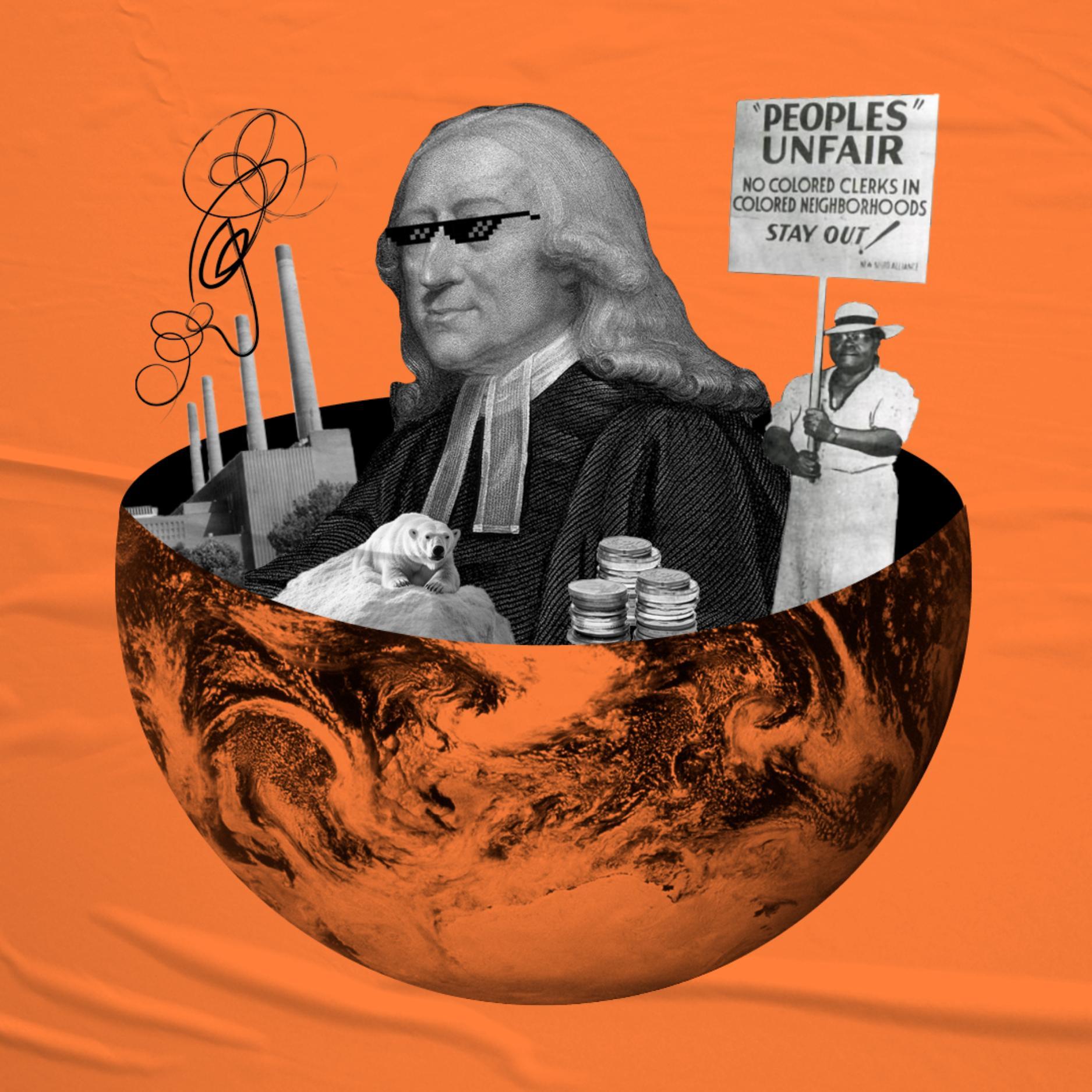
The idea that churches. Changes, degradation of our climate, pollution, etc. Impact people of color and marginalized people, people in poverty, more deeply, more directly than they do others. And so there's an integration or an overlap between these concerns about the environment and racism. And the section in the Social Principles, which is Caring for God's Creation, really brings that into the grounding, the reasoning why Caring for God's Creation is the first of all the main divisions.
In the social principles. That's the ground that we learn. And one of the pieces of it that's really important to me is that our identity is a part of creation. We're not something apart or separate from creation. And that creation was not created for us. Humanity was created for creation, for intimacy and responsibility with creation.
And for me, that means kinship. Intimacy and responsibility means kinship. We are related. Our cousins are the orca and the slugs and, you know... We're a part of that. And not only just the things that breathe and have circulation, but we are a part of the planet. We're part of the dirt. We're part of the soil. We're part of the air.
We're part of the stars. All of that is one integrated thing. And our role as human beings in that is to care for all of it. Because as far as we know, we are the part of creation that is self-aware and that can choose to take that responsibility and have that intimacy with creation. So that really guides a lot of my work, and I think that grew out of my career in architecture as well, because I came into architecture at a time that sustainability was really becoming a core issue for architecture at the time.
Yeah, the way you just phrased that whole and what's the ground of the beginning of the social principle, oder der Grunde of it, now helps me to understand because I always smiled a bit or laughed a bit about this section of waste in space. And I was like, why is this in there? But now when you think about the being in kinship and connection with the planet, the stars, everything, then this is also a part of it. We create waste there.
What do we do with this and what is our position on that? So that makes total sense. I've always been fascinated with science fiction as well and a lot of the science fiction that I really appreciate addresses this issue of God not just being God of our planet, because creation is much more than just our planet and so we have a responsibility and intimacy with the rest of the universe yeah, oh wow cool Cool.
I think most of the questions I had, I feel like we covered. Maybe let's, how would you, do you have some recommendations or initiatives or something like that, that would help our listeners who want to get more involved or maybe pastors who listen and say, hey, this is something I did. How I integrated the social principles in a sermon series or whatever is there something you can recommend or do or resources this is a good way to interact with that, another reason that I'm really glad that you're doing this topic in this series, is that in the past I had been involved in helping people learn about the social principles and I got involved in other things, Um, so your, your invitation to me to participate in this led me to think,
oh, I really need to do something about that. And I decided that I would have a monthly discussion group about one of the social principles. And I'm sort of building that on the back of a book discussion group that we already had going, that was going really well. And we ended up often reading books together that somehow related to the issue of creation care and or racism.
So I decided, okay, I'm just going to do once a month. As long as people want to come to it, we would focus on one topic in the social principles. And so I'm planning to do that. I'm starting next month. I'm going to be doing that. Und die only thing people have to read is the section from the Social Principles und dann you just take it from there There's a nice preamble to it and then they could read just that section, or even a subsection on it, although probably it's helpful to read the whole section I think there are six, topical sections und, And the Board of Church and Society, the General Board of Church and Society, is the sort of the institutional shepherd of the social principles.
They're the ones that oversaw rewriting it before the last General Conference. And they have some really great resources on their website, or you can do through umc.org. They have curriculum to help teach a class. They have resources there. They have a really great four-page primer. This is the history of the social principles and how you can use them.
Yeah, so there's a lot of material available. And I think if you break it down into little bite-sized pieces, I think people will be fascinated with it. And some of them will be more controversial than others, right? Some of it will be maybe hard to swallow. The one that's on the Community of All Creation is the name of the first main section, Community of All Creation.
Und es gibt Statements über Kreation in Peril, Destruction of Ecosystems, Global Warming und Climate Change, Dependence auf Fossil Fuels, Stewardship of Creation, Environmental Racism, Sustainable Policies und Practices, Food Justice. Caring for All Creatures, Protecting Space, and Affirming Science and Traditional Wisdom.
Oh, the last part. Yes. So, some people in our current climate here in the United States will say the social principles are woke. Yeah, totally. But I think they're worth learning more about. Definitely. Yeah, wow, cool. I will put the links you just mentioned from the website into our podcast episode. So if people just want to click on it and see where the website is.
And I hope that the German church, I think they will, as far as they know, bring up also something like a little booklet or something to how do we introduce the new revised social principles to the church or something. I think they will come. I hope so. You're always a bit behind because most of what America does in agencies is a group of some pastors and lay people have to do it on the side on their own to create that, right? But it will come probably.
And yeah, Paul, do you want to add anything to that? I feel we covered a lot of ground, good ideas, good thoughts, good background for the social principles. So when we next week jump into the first section with our three guests we have from different backgrounds, we are pretty well prepared, I feel like.
That's great. No, I don't really have anything to add. I got to talk about things that I'm passionate about. I'm glad for the invitation. And there's so much more to say. So next year, when you do the next topic, let me know. Ja, okay, we'll do so. And thank you everybody for listening. Oh yeah, and Paul, if someone wants to reach out, send you an email or want to watch you on YouTube and see how a fairy preacher you are, what's the best way to get a hold on you or contact you?
We do live stream and then save our worship services on YouTube. And our website is pioneerww.org. And my personal email address is paul at wwgtlh.org. That stands for, wow, we get to live here. Oh, cool. I didn't know that. Cool. Yes. Wow, we get to live here. Awesome. Paul at We Get to Live Here. Wow, we get to live here, in short. I will put that also in the notes.
So if you feel like you want to hear more about it or some ideas Paul had, maybe you want to Zoom in for his discussion group and you offer Zoom, I don't know, let him know. That would be fun. All right. Thank you, Damien. All right. Thank you, Paul. Vielen Dank, everybody. Share this episode, if you like, too.
Share this on Instagram, share this with your friends and hope to see you or hear you or talk to you next Monday when it is again another episode with The Holy Club Podcast. Music.
