

Kapitelklicken springt direkt hin
Shownotes
Disclaimer: This episode was made with AI.
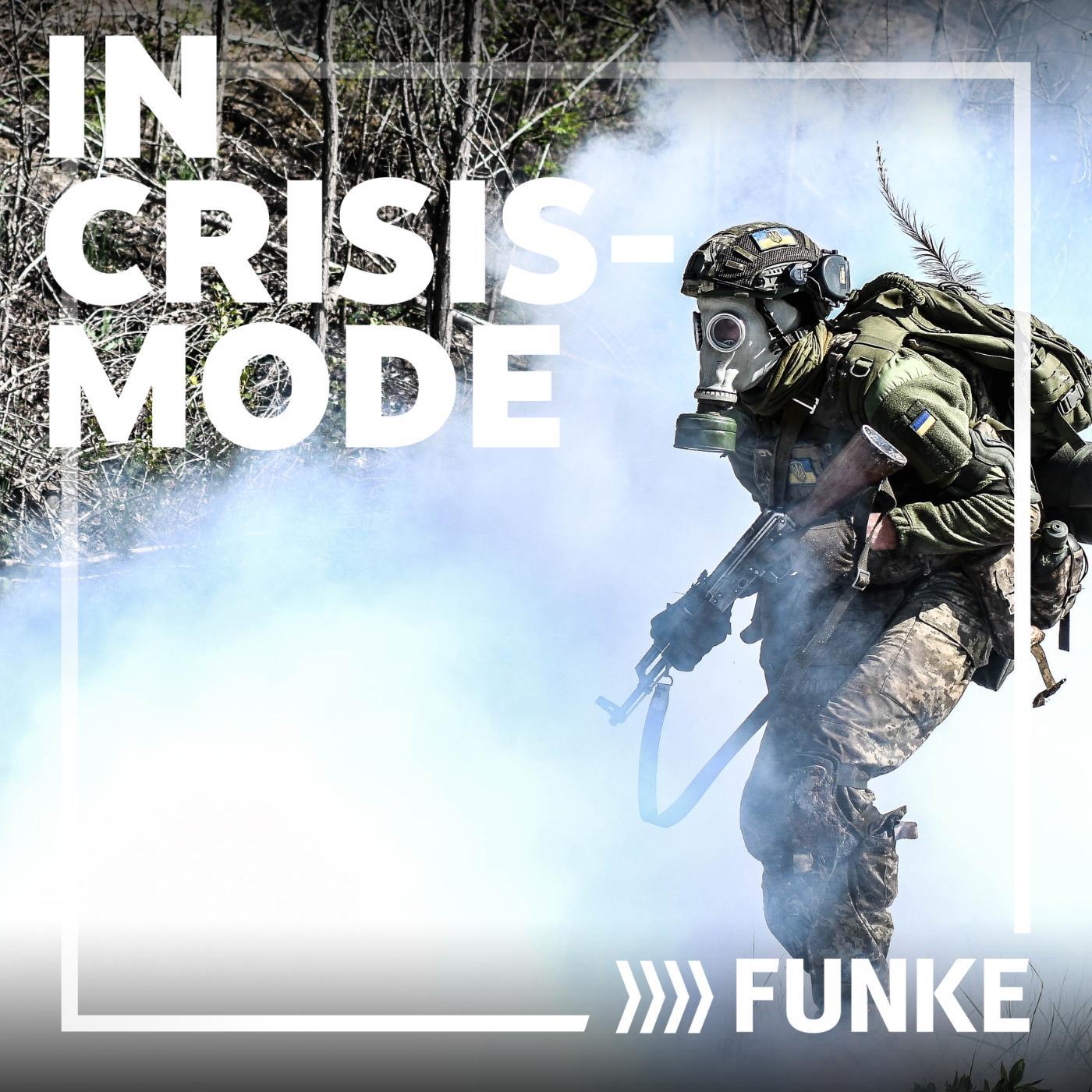
In this episode of “In Crisis Mode", FUNKE war reporter Jan Jessen accompanies young recruits in eastern Ukraine. They are between 18 and 24 years old, have volunteered – and are being sent to the front lines.
Why do these young men enlist? What do they think about fear, responsibility, and death? And how do they prepare themselves for the worst?
🎧 Featuring: Stanislav, Andrei, Danyl – and a military instructor.
🧭 Episode Overview
1 | Gunfire, Drill, Reality – A Descent into Hell
Why Ukraine recruits young men with financial incentives and a promise of purpose – and how training pushes them to their mental limits.
With: Mykola (Instructor), Andrei (21, medic in training)
2 | Fear, Decision, Family
Between silence, doubt, and conviction – why some recruits don’t even tell their parents about their decision.
With: Anonymous recruit (20, Kyiv region), Stanislav (volunteer, early 20s)
3 | “We Forge Steel with Gunfire”
The goal: extreme stress, mental overload, relentless pressure. The method: live ammunition, obstacles, smoke, and constant strain.
With: Mykola (Instructor)
4 | “If You’re Not Afraid, You’re Not Alive”
Danyl – perhaps the most reflective of the young recruits – talks about fear, his thoughts in the trenches, and how he’s preparing for the front.
With: Danyl (18, callsign: “Historian”)
5 | The Front Is Hell
What’s drilled into them during training must prove itself at the front line. Why many don’t come back – and Jan’s observations on the current situation.
📬 Contact & Feedback
Questions, feedback, ideas? Get in touch:
✉️ krisenmodus@funkemedien.de
🟢 Subscribe Now
“Im Krisenmodus” – available on all podcast platforms:
Spotify (open.spotify.com/show/0IQW1w25NYSrz60aAPzwvB?s…) | Apple Podcasts (podcasts.apple.com/de/podcast/im-krisenmodus/i…) | Deezer (deezer.com/de/show/3737197) | YouTube (youtube.com/@Krisenmodus-Podcast_FUNKE)
📅 New Episodes
Every two weeks, always on Wednesdays.
Im Krisenmodus is a podcast by the FUNKE Media Group.
Transkriptvom Podcast bereitgestellt · Zeitmarken springen hin
How do you prepare young men for a war that has long since become hell? How does a volunteer program work that lures recruits with money to find soldiers for the trench warfare in Ukraine? And what happens to those who sign up? In Crisis Mode, the podcast from Conflict Zones with Jan Jessen. Music. Hello to a new episode of the Crisis Mode. Mein Name ist Jan Jessen.
Ich bin der Politiker der NRZ und bin ein Reporter für die Funk Media Group in crisis regions für viele Jahre. Heute, ich bin zu einem Training Camp in eastern Ukraine. Das ist wo wir, ein Ort wir nicht genauer name, für eine gute Grunde. Denn diese Training Centers oder Training Grounds sind auch die Tarkance für Russische attacks.
The day before wir arrived at this Training Center in eastern Ukraine, there war ein Attack neben Sumy, auf der Borde mit Russland. Six Recruits wurden killed. Just a few days ago, a few days before this recording, there was another attack on a training center. Twelve recruits or soldiers were killed, so these training centers are indeed targets for Russian air forces, and that's why the exact name or location of this training camp can't be mentioned.
It was a kind of hollow, surrounded by hilly, forested terrain. They had built a training course there where these soldiers were training. It was a training ground of the 28th Brigade, which I visited multiple times before. On the day we were there, 30 young men between the ages of 18 and 24 were on-site, training for their first frontline deployment.
All of them were volunteers, attracted by a new recruitment programme. You may know that Ukraine has massive recruitment problems. The brigades at the front are now severely understaffed. The losses are simply immense, both those who are killed or so severely injured that they can no longer fight. It's been relatively difficult for Ukraine to find volunteers, even when it comes to general mobilisation.
Normally men aged 25 and older are required to serve or can be conscripted into the Ukrainian army. That's also proving difficult. Many avoid military service. The number of deserters is increasing. We discussed this in another episode of our podcast. We'll put that in the show notes. So now there are attempts to make military service more appealing.
And for that, a volunteer program was launched earlier this year. Those who commit for one year are promised, among other things, a salary equivalent to 22,000 euros per year. Sounds low at first, but in a country where the average annual income is €5,000, it's quite attractive for some young men. So the people we met at this training ground, these recruits, had all come through that programme.
And the question is, what does training even mean, and how can you possibly learn what's happening at the front? The reports and videos we see from the front are brutal, absolutely horrific. It's truly a bloodbath happening up there now, especially due to the immense activity of drones. Die battlefield ist mehr transparent als immer, und es einfach ultra, ultra, ultra gefährlich ist jetzt.
Die junge Recherche hatten bereits vier Wochen der Training und waren bereit, dass sie einen sehr speziellen Kursen das Tag haben, was sie zu den Füßen und Psychologischen Grenzen. Ein von den Instrukturen, Mikola, ein altes Soldat und der Head des Trainers, erklärtete, was das Tag war. Es ist primarily über Psychologische Training. Wir wollen diese Menschen in die Kriegsbewegung machen.
Sie lernen, wie sie zu tun, Armour und Stress haben. Und sie sollten diese Skills mit ihnen zu den Frontlines nehmen. Was wir da war, was wirklich Training unter realen Kombat conditions. Die Instructors waren live-ammunition. Wir mussten die Protekte-Vests und Helmets aufsicht, weil die Bullets literally fliegen um uns.
Manchmal hört sie sie über. Es war wie ein Amerikaner Film, wie ein Full Metal Jacket. Die Instructors shouted at the young men as they crawled through barbed wire. Shots were fired right next to them. Earth flew up from the bullet impacts. It was pretty intense. Of course, I also spoke with some of the young men there and asked what motivated them.
One of them is Andriy, 21, from a region in western Ukraine. He wants to serve as a medic at the front. They said it's your decision. You can leave whenever you want. Half of my money went to my family, the other half to friends. That was important to me. Die erste Erhöhung ist ungefähr 4,500 Euro. Sie bekommen das sofort nach dem Kontrakt zu erhalten.
Andrei sagte er ein Teil von seinem Familie und ein paar zu seinen Freunden. Sie waren sicherlich glücklich darüber. Again, 4,300 Euro ist eine volljährige Zahl in Ukraine. A huge amount von Geld, von Ukrainianem Standards. By the way, obwohl Andrei will sein, alle volunteers sind in der Infanterie. Wenn Sie in der Programme joinen und signieren, Sie gehen in der Infanterie.
Du kannst dann wählen, ein Medik, ein Sniper oder ein Storm Unit sein. Aber du bist ein Teil der Infanterie. Und Infanterie ist jetzt die größte Herausforderung. Es gibt Fronten, wo mehr als die Hälfte der Begriff nicht zurückkommen sind. Sie either die, oder sind wirklich sehr verletzt. Die Situation auf der Fronten ist extrem brutal.
Some Recruits nicht sogar sagen, wie ein 20-jähriger von der Kyiv-Region, der nicht wollte, dass er seine Namen hat. Er hat sich auf die Hälfte auf seinem eigenen, ohne zu sprechen zu sein. You can imagine that a mother might not be thrilled to hear that her son is going to the front, or being prepared for it. I felt torn when he told me that.
I think it's something you should discuss with your family. I didn't tell my mother I was leaving until a week later. But these guys are adults, legally of age, and can do what they want. For many, money really is a decisive factor in choosing to join the army. They told us that openly. But it's not the only reason Stanislav, for example, in his early 20s from the Dnipro-Petrovsk region sees it as a chance too. That's also part of this programme.
After the year of service, if you survive, you're exempt from conscription for a long time. You're allowed to travel abroad. You get your education or university studies paid for. You receive free medical care, including dental work. It's a very attractive package, to be honest. And as Stanislav said, I want to defend my country. Für viele, das ist auch eine reale Motivation zu picken, eine Weapon zu holen.
Für Ukraine's leadership, das Programm ist ein Risky-Balancing-Act. Auf der einen Seite, die Menschen sind mit Geld zu verabschieden, die die Exhausted-Depleted Brigades sind wichtig. Es gibt enormen Probleme, dass es auch ein Resistanz zu, wie recruitment officers manchmal forcefully conscripte Menschen auf die Straße.
Es gibt bereits viele Anzeige Anzeige, sogar eine Anzeige Anzeige gegen recruitment. There's a lot of resentment. The number of volunteers has dropped significantly. When Russia first invaded in February 2022, tens of thousands signed up to fight. Many of them are now dead or too wounded to continue. So new ways must be found to maintain the Ukrainian army's combat readiness.
That's why this volunteer program was introduced. But of course, this too can cause unrest. Some soldiers already in service say, Why are these new recruits getting such good conditions while we were conscripted, have been serving for at least three years, probably longer, and get worse pay without these benefits?
Das kann frustrieren in den ranks. Und es könnte auch soziale tensionen, besonders wenn viele 18-24 Jahre alt sind. Das könnte protestieren. Angry Mothers in den Straßen. So die Regierung ist auf die Räume. Wie es endet wird, niemand weiß. Es gibt eine Worte in der Campen. Wir sind ein Millionen, bis die erste Grenade. Warum ein Millionen?
Weil die Zahl ist 1 Millionen Hrivn, die Ukraine-kurrenz, die 22,000 Euro. Die Motivationen von diesen Youngen Recruiten sind von patriotic Idealismus zu den Prospekt, von einem viel Geld in einem Jahr und von einem Geld zu bekommen. Für viele, es ist auch ein Rite of Passage, etwas zu sagen, zu sagen, zu Freunde.
Ich habe niemandem gesagt, vielleicht ein Freund, und er hat gesagt, du bist ein Idiot. Es ist ein guter Opportunity. Ich habe eine Ausbildung, ich habe einen Studium, und natürlich, ich will, ich will, ich will, ich will, ich will, Many brigades are recruiting in a TikTok-style way. You see lots of billboards in Ukraine with soldiers fighting zombies or orks, or riding cats through zombie armies.
It's clearly aimed at a young audience. And maybe that's another reason why some sign up. They don't want to look like cowards. There are many factors at play. The training, in any case, is extremely tough. The guys we saw had already been training for four weeks and had learned a lot. As I mentioned earlier, and as you heard in the sound snippets, the training is really intense. They're fully equipped.
Backpack, gas mask, rifle, everything you'd carry in the field, including bulletproof vests. They're pushed through the course. A course like the ones you see in movies, with various obstacles, trench systems they have to jump into and run through. As if storming a trench held by Russians. Some of the recruits even trained with live ammunition.
Then they go into bunkers filled with smoke grenades. Landmines explode, deafeningly loud. Hand grenades are thrown. All to put recruits under massive psychological stress, on top of the extreme physical exertion. The guys were absolutely exhausted by the time they reached the end of the course. Das ist Mikola, der der Vorführer, die die vorhin gesprochen hat.
Er hat mir ein Quote, ich finde, ein bisschen borderline. Er ist wichtig. Dass er die Beobachtung aus der Beobachtung ist, um sie zu zeigen, um sie zu zeigen, um sie zu zeigen. The goal of such exercises ist zu unbalance the fighter. Wir simulate a mass enemy attack und want to see if they will complete their mission or collapse.
Will they act or crawl into a hole? Today proved that we are well prepared. Everyone completed the parkour. No one dropped out. The rhetoric is, of course, very martial in such a situation. Talk of warriors, fighters and so on. But this ground combat we witnessed, infantry warfare, is just one part of it.
Ukrainians are facing serious problems on many fronts right now. As I said, recruitment issues on one side. On the other, the Russians have been advancing steadily in recent weeks. The summer offensive has begun, particularly in Donbass, near Kostyantinivka, Kramatorsk, Slovyansk, and also in the north, near Sumy, there are growing Russian attacks.
At the same time, Ukraine has struck back impressively. The weekend before this podcast was recorded, there was an unprecedented attack. You've probably heard about it. Something never before seen in military history, an attack by Ukrainian intelligence on Russian airfields, inside Russia, deep inside Russia, in Siberia, thousands of kilometers away.
Ukrainian intelligence managed to smuggle drones into Russia, to Siberia even, and Murmansk in the far north near the Arctic. The drones were hidden in trucks, and the roofs of the trucks, parked near airfields, opened remotely to release the drones, which then attacked Russia's strategic bomber fleet.
It was a truly insane operation. Maybe we'll talk more about how something like that works and the enormous logistics behind it in another episode. Ukraine, despite limited resources, keeps hitting back, trying new approaches to stay in the fight and to position itself as strongly as possible in the negotiations now underway in Istanbul.
At the time of this podcast recording, the second round of negotiations had just taken place, which is not exactly weak. I mean, in negotiations, it's simply important to be in a strong negotiating position to force the opponent into compromises. At the moment, the whole thing is really difficult. One has to say, the positions are very, very far apart.
There's no sign that this will be resolved in the next few weeks or months, especially since the US is no longer acting as a mediator. So, as I said, it's currently a bit difficult. But back to the training camp, one recruit who particularly stood out was Daniel. Daniel also looked like a very young man with a real boyish face and a bit of peach fuzz, and he was very talkative.
There are no people who aren't afraid. People who aren't afraid don't live. Do I think about what the future will hold so, but very cautiously? Why? Because I understand that when I think about that, everyone is afraid. Anyone who isn't afraid isn't alive. I don't often think about what awaits me at the front, otherwise it would break me.
Sometimes I imagine myself lying in the trench when it's raining or when we're attacked. I try to be prepared, even if I'm never 100% successful. But that's why I'm here. That's why I train. He's from Krivje Rii. That's Zelensky's hometown. And his radio call sign is Historian. Soldiers always have call signs Those aren't their real names Everyone can choose their fighter name Their radio call sign, so to speak And he told me he'd been interested in military history Since he was a child The death of his father left a mark on him And when the Russians invaded Ukraine He told his mother I'll join the military one day He was 15 then Now as I said, he's 18 And his statements really hit you deeply,
There are no people who aren't afraid People who aren't afraid. Das ist einfach so, dass wir in den Osten arbeiten können. Ich weiß, dass wir eine lange Zeit gehen können, um die Menschen zu verabschieden. Das ist die Wille zu leben. Wir machen das nicht für Spaß. Wir machen das einfach so, dass wir das zu leben.
In Gesprächen, Daniel kommt heraus als sehr klar und composed, und wie ich sagte, es war sehr wichtig für ihn zu sprechen. But he also knows that the training is, of course, only the beginning. Yes, like I said, he's not someone, and he made that very clear to me, who makes quick decisions. He really prepared for this for a long time, also for what he's doing there.
And he wrestled with the decision for a long time, whether he really wanted to do it. He has now decided to go through with it. I can only hope that it wasn't a decision he'll pay for with his life or his physical health or his mental health. That happens in war, of course. Und wie ich sagte, ich hoffe, er macht es aus clean. Ich hoffe, sie alle machen es aus clean.
Sie sind einfach junge Menschen, die, wenn sie mit dem Training fertig sind, sie jetzt noch vier Wochen von Spezialis-Training haben, werden zu den Front und in die Hell. Es gibt keine andere Art. Was gerade passiert ist Hell. All die reports you see, all die reports you hear, also von Soldaten, sagen, dass es einfach absolut brutal ist.
On meiner letzte trip, ich sprach mit jemandem, der mich war in der Front-Section zwischen Kostyantinivka und Pokrovsk in eastern Ukraine, in the southeast. He said that nowadays, when you go all the way up to the zero line, that's the very front line, in the provisional holes you have to dig yourself, Russian drones can drop up to 150 drone grenades into holes where two soldiers are lying. It's just complete madness.
What must be going on up there right now? It must really, really be insane. And in that sense, these young people are being sent into hell. Und das ist vielleicht etwas, dass sie nicht wirklich vorbereitet werden können, egal wie gut die Training ist. Das ist wie die Krieg weitergeht, jetzt in der vierten Jahre.
Für fast drei und ein halb Jahre, Russland hat sich in der Krieg gegen Ukraine gewonnen. Für fast drei und ein halb Jahre, Russland hat sich in der Ukraine gebrochenen Stadt und critical Infrastruktur. Und für fast drei und ein halb Jahre, die Menschen sind auf der Front, für eine Krieg, die Putin begonnen hat.
Und das wird, hoffentlich, auf der Negotiating Table geschlossen. Whether and when that will happen is the big question. Maybe Stanislav, Daniel and Andri will be lucky. Maybe this war will end quickly and they won't have to complete a whole year and fight. But the outlook, as I already said, is difficult at the diplomatic level.
The war simply continues without pause. Russia has so far rejected offers or calls for a ceasefire. And ceasefires that had been declared have been consistently broken. Civilians are dying again and again, for example in attacks on the Zaporizhia region and elsewhere. Children among them. Moscow also speaks of Ukrainian strikes.
Ukraine has been hitting targets more often now in the Russian hinterland. These attacks on airports are being talked about a lot right now. But there are also repeated sabotage operations. Bridges are being blown up, inside Russia itself. So the war is spreading rather than being contained. Dank. In Crisis Mode, the podcast from Conflict Zones with Jan Jessen.
Music.
