

Kapitelklicken springt direkt hin
Shownotes
Note: This episode uses artificial intelligence to translate and dub the voice of Jan Jessen into English.
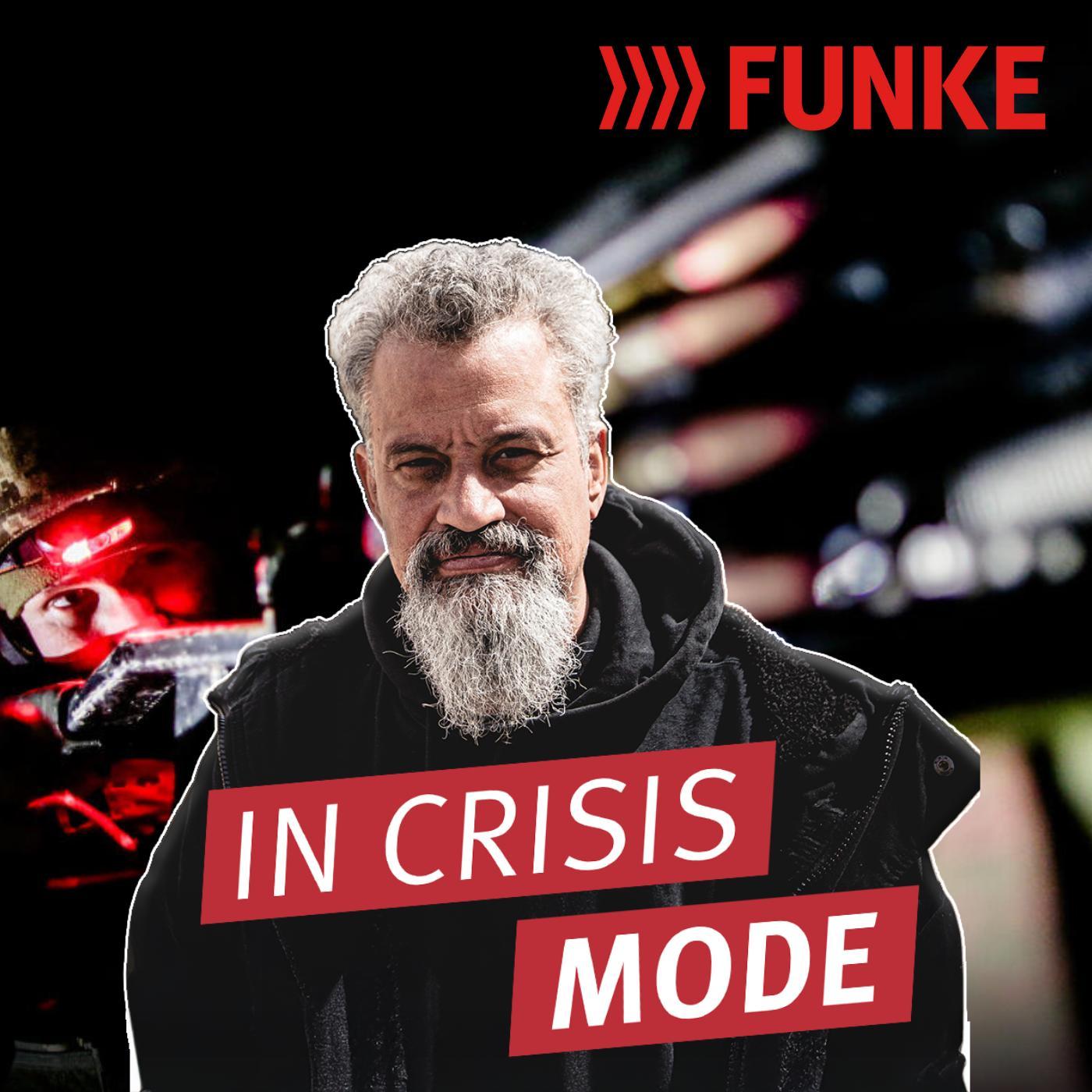
The war in Ukraine has entered its fourth year – and while politicians talk, many Ukrainians fight simply to survive. In this episode of "In Crisis Mode", FUNKE war reporter Jan Jessen (nrz.de/autoren/jan-jessen) brings voices from a nation under fire: people who have lost friends, homes, and hope – but not their resolve. How do Ukrainians view the stalled peace talks? What is daily life like under drones and artillery? And what should the West do now?
Artem Lysak, journalist from Kyiv
“Trump talks about money. But does he even understand this war?”
Andrij Melnyk, former Ukrainian ambassador
“Germany must take a stand: weapons, sanctions, red lines.”
Mitya, frontline soldier in the east
“It’s a drone war. And the fear of ending up in the meat grinder is real.”
Kateryna Trapeznikova, field medic
“We work on broken roads, with wounded comrades, and no time to stop.”
Jan Jessen, war reporter
“I saw graveyards growing. And people who still refuse to give up.”
🧭 Chapter Overview
1 | "This is our life" – Kyiv’s frontline inside and out
Artem Lysak shares grief, anger – and why Trump’s policy scares him.
2 | Maximum Demands, No Peace – Putin’s Playbook
Andrij Melnyk explains Russia’s strategy and what the West must do now.
3 | Drones and Despair – A Soldier’s Reality
Mitya talks about frontline fear, exhaustion – and fighting anyway.
4 | Under Fire – Medical Evacuations in a Warzone
Kateryna describes chaotic rescues and what keeps her going.
5 | Europe Must Step Up – Jan’s Take on the West’s Role
What does real support for Ukraine look like in year four of war?
Recommended Episodes
Myanmar in Ruins - after the earthquake (morgenpost.de/podcast/article408672264/myanmar…)
Kobane in Syria - The city that won't fall (morgenpost.de/podcast/article408743504/kobane-…)
🆘 Help out!
NGOs like Vostok SOS (vostok-sos-usa.org), Libereco (libereco.org/en), and Repair Together (repair-together.com/home) provide humanitarian aid, evacuations, and psychological support in Ukraine. Every donation helps.
📩 Contact & Feedback
Have questions, ideas, or thoughts? Reach us at:
📧 krisenmodus@funkemedien.de
🟢 Follow & Subscribe
In Crisis Mode – available on all major podcast platforms:
Spotify (open.spotify.com/show/0IQW1w25NYSrz60aAPzwvB) | Apple Podcasts (podcasts.apple.com/de/podcast/im-krisenmodus/i…) | Deezer (deezer.com/de/show/3737197) | YouTube (youtube.com/@Krisenmodus-Podcast_FUNKE/videos)
Just search for In Crisis Mode and click “Follow” to stay updated.
📅 New episodes
Every other Wednesday
In Crisis Mode is a podcast by the FUNKE Media Group.
Transkriptvom Podcast bereitgestellt · Zeitmarken springen hin
What happens when talks of peace turn into mere propaganda? When the West turns a blind eye and leaves Ukraine with nothing but empty promises? In this episode of In Crisis Mode, you'll hear voices from Ukraine. A journalist, a diplomat, former Ukrainian ambassador Andriy Melnyk, a soldier and a medic.
It's about weapons, disappointment and the struggle to keep going. For many people, the daily statements from the Trump administration are just meme in Twitter or Facebook. But for us, it's life, it's our lives and the lives of Ukrainians. Music. In Crisis Mode, the podcast from Conflict Zones with Jan Jessen.
Hello and welcome to a new episode. I'm Jan Jessen, a war and crisis reporter for the Funko Media Group. Du findestest meine Informationen in den Hamburger Abendblatt und den Berliner Morgenpost. Ein paar Wochen vorhin, ich war in der Ukraine in der Ukraine, observing die Situation in der Front. Ich sah die Soldaten und Städte, sprach mit Soldaten über ihre Erwartungen für dieses Jahr, und, ja, es ist klar, dass Peace ist noch ein distantes Traum.
Die Krieg weiterentwickelt. Wir sind jetzt in der vierte Jahre dieser Krieg, und, obwohl die Aufmerksamkeit von den US-Diplomaten, It shows no signs of ending. It's not a frozen conflict. Russian forces continue their attacks, in fact, more intensely than half a year ago. Major offensives are expected this spring. This war is alive, and it kills.
It takes the lives of countless soldiers at the front. That's always the most heartbreaking part of my visits. Watching the graveyards grow, filled with flags marking the fallen of Ukraine and the military units they served in. Diese Graveyards keep expanding, aber die Zivilisten sind auch. In April alone, zwei major Russian attacks occurred.
Eine in Krevyry, Präsident Zelensky's hometown, wo 18 Zivilisten waren, und eine in Sumy, eine Stadt neben dem Russland, wo 37 Menschen in mid-April died. During Easter, Russia announced a unilateral 30-hour ceasefire. Aber die Schelling never stopped. Some areas quieted down briefly, aber noch nicht nur gegen die Militär-Target, sondern auch gegen die Zivilisten.
In response, Präsident Zelenskyy proposed ein 30-Jähriger für die Zivilisten, eine gestür, die unanswered ist, von Russland und den USA. Und so, die Krieg ist auf. Die Ukraine in der Ukraine sind, understandlich, war-weary. Everyone I speak to is tired. A cloud of resignation hangs over die Land. Die Situation at the Front ist dire.
Russische Forces-Avanz-Daily-Capturierterritory. Ukrainian troops try to hold on, but the exhaustion is deep. People desperately want the war to end. But the big question is, how will it end? And what do people really think about the so-called peace initiatives, such as those proposed by the US? I talked to several people about this, including journalist Artem Lysak, who lives in Kiev.
Er hat sich die 2014 Maiden-Protests gesehen, die Annexation von Crimea und die 2014-Ware und die 2022-Full-Scale-Invasion. Er represents eine ganze Generation. Sometimes I open my Facebook friends page und I can count how many of them are no longer alive, because of the war, of course. Artem, whom I met a few months ago, now works with us as a Fixer, someone who knows the area inside out. Er hilft, plan unsere reporting-trips, erhältst du Zugang, und erhältst als unsere Translator.
Er hat auch gearbeitet für major international media, wie Sky News, und hat über ein Jahr unter der Karte auf den Russland-Occupied Crimea, bis er wurde briefly arrested und verabschiedelt. Er ist ein brave und starkes Engageer Mensch. Wenn Artem sagt, dass sie mit Russland sind eine farce sind, ist nicht cynicism, es experience.
Er ist zwischen US und Russland, ich denke, es ist einfach eine farce. You know, all the Russian propaganda cliché now are going from White House. I mean, it turns out negotiation just means listening to Russia and repeating its talking points. Another key voice in this episode is Andrei Melnik, the former Ukrainian ambassador to Germany.
You might remember him as someone known for speaking undiplomatically, especially when criticizing Germany's hesitancy to deliver weapons to Ukraine. His tweets and statements were blunt and stirred controversy, but they also highlighted real policy failures. Currently ambassador to Brazil, Melnick will soon move to the United Nations in New York.
He shares Artem's views. Putin follows a perfide strategy, maximum demands presented as compromise while secretly intensifying warfare. Zu verkaufen. Und heimlich, Kriegshandlungen intensivieren immer neue Drohkulissen aufbauen. Putin, he says, uses a calculated and devious negotiation strategy, making impossible demands while secretly escalating the war.
Russia insists on keeping annexed regions, even those it hasn't fully captured, like Zaporizhia, Kherson, Luhansk, Donetsk, and of course Crimea. Every time Ukraine proposes a peace plan, Russia Russia ignores es. Meanwhile, Trump-Administration klaims it could end the war within 24 hours. But its rhetoric mirrors Russian talking points.
US Special Envoys nun sogar suggest Ukraine might have to give up land, especially Russian-speaking areas, which is a harmful oversimplification. Trump goes so far as to blame Ukraine for the war. This makes true negotiations almost impossible, and incredibly easy for Russia to exploit. Melnick has clear demands. He wants Germany to act, not symbolically, but effectively.
To be fair, Germany has become Ukraine's second most important partner, after the US. It has supplied valuable systems like the GPARD anti-aircraft tank, the Iris T air defense system, self-propelled howitzers, Leopard 2 tanks and artillery. But Melnick says it's still not enough. This means that the new Chancellor Merz should announce a new course on May 6, the day he takes office.
On the one hand, to massively increase arms deliveries to Ukraine in close coordination mit europäischen Partnern. Auf der anderen Seite, zu tightenen Sanktions auf Russland significantly. Das includes ein complete hold zu imports von russischen LNG-Gas. Es includes cutting all russischen Banken aus von der SWIFT-System.
Es also includes ein total ban auf russischen government bonds auf EU-stock-exchanges und viel mehr. Wenn Chancellor Merz takes diese bold steps, believe me, he will automatically be invited to the negotiation table. because he will be holding incredibly strong leverage. Leverage that can help stop the war.
Relations with Germany have improved, but the core issue remains. Everything took too long. We debated for months whether to send the PZH 2,000 howitzer or Leopard 2 tanks. The fear was always the same, that Germany would be seen as a party to the war, that if we sent heavy weapons, Putin would consider it a red line.
Es gab keine Angst, dass Deutschland selbst hätte. Aber diese Angst wurden unfounded. Ein Beispiel ist die Taurus-Missile-System. A long-range cruise-missile, similar zu Franz's Scalp oder Briten's Storm Shadow, Ukraine desperately needs diese Weapons zu streiten hinter Russian lines, zu cut-off Supply-Routes und weaken Frontline-Forses.
Aber, wiederum, die argument gegen den Leveren ist die gleiche. Wir könnten ein Party für die Worte. Ich glaube, das Argument ist nonsensisch. Und ich glaube, Deutschland könnte viel mehr haben. Und es würde wirklich helfen, wenn Deutschland, mit anderen Westernen Partnern, hat sich die Ukraine von Anfang an unterstützt, mit dem es geplant hat, was es geplant hat, was es geplant hat, und was es geplant hat militärisch, zu stabilisieren die Fronten.
Das ist auch an die Sanktionen. Die Fakt, dass die Menschen in Deutschland jetzt wieder einmal die Möglichkeit der Reaktivation von Nord Stream 2 ist natürlich nicht helfen, die Ukraine's negotiating position. One person who's experiencing the full brutality of this war is Mitya. He's a soldier stationed in the Donbas, near Kostyantinivka.
I've mentioned Mitya in the podcast a few times before. He used to work as a fixer for us until he was drafted last year. Now he's with the 28th Brigade, stationed at one of the hot zones along the front. I talk to him regularly about how he's doing and what his thoughts are. I recently spoke to him again, and he shared his views on the current situation.
His words are powerful and moving. Behind every statistic, there's a family, a story. The situation in the area of responsibility of my unit is very difficult, I would say. And not because Russians are, I don't know, swiftly advancing or something. They do not, but the cost we pay for holding them back is very high.
And it's not only the raw numbers of casualties or something, aber die damage sie inflicting, wie bei jedem Soldaten, denn behind jedem Soldaten sind Familien. Als ich schon erwähnt, Mitya war ein Fixer und Journalist. Recently, er hat sich wirklich zufrieden. Er hat sich immer wieder in die Welt geblieben, besonders seit er als Teil einer Kombat-Unit.
Er hat noch nicht auf die Front-Line gearbeitet, was er nennt, wie der Meat Grinder. Er hat sich die Situation neben den Front-Linen als verrückt, mit Drones constantly in the sky, making movement nearly impossible. Mitja fears he might soon be sent directly into the thick of battle, and I had the impression he's been teetering on the edge of depression in recent weeks.
Right now there are just dozens of drones simultaneously in the air, so it is almost impossible to make some sneak moves. You cannot sneak in or sneak out from the frontline positions. You almost can't do that. Ich weiß nicht, wir müssen etwas zu erreichen, um wieder zu kommen. Otherwise, it becomes increasingly difficult to reach the front, because drones are also present in nearby towns, attacking anything that moves.
The Russians even use decoy drones, which land and wait, sometimes at bus stops, before launching attacks on passing vehicles. They target everything, civilian cars, military vehicles, even ambulances. The battlefield is now completely transparent. As Mitya said, it's almost impossible to move without being seen by surveillance drones and then attacked, whether by kamikaze drones or those dropping explosives.
This also makes it incredibly hard for us as journalists to report from the front. Coverage is becoming more dangerous and limited. Another person we've spoken about on this podcast is Katerina Krapisnikova, a combat medic in the 47th Brigade. You might remember her story, especially that of her fiancé, Oleg, who was also in the 47th and died in February of last year.
His death was a devastating blow to her. She once shared the story of their relationship with me. It was deeply emotional and moving. Katerina has seen countless wounded soldiers, not all of whom she was able to save, but she keeps going every day. One of the main challenges, though, for us as the casualty care providers ist die Qualität der Evacuation Routen.
Die Risky-Konditionen der Tracks der Evacke mehr oftmals, also in der Zeit. Für die nächsten Casualty Extraction. Wir brauchen die Verhäuer-Vehäu-Vehäu-Vehäu-Vehäu. Was Katarina describes mirrors what Mitya says. Russian drones attack everything. Evacuation teams, medical vehicles, field hospitals. The rules of war, like the Geneva Conventions, seem to hold no weight here.
Even vehicles marked with a Red Cross are not spared. This makes the situation incredibly dangerous for field medics like Katarina. Adding to this, under the Trump administration, USAID, America's International Development Agency, has been effectively dismantled. Billions in aid have been cut, affecting not only Africa, where many now suffer due to lack of humanitarian assistance, but also Ukraine.
USAID had supported countless people in frontline towns, funding organizations that delivered food, helped evacuate civilians, and provided medical care. Das Unterstützung ist jetzt nicht mehr. Es ist eine falsche Realität, eine der sich die Ukraine weiter auf die Defensive auf und schaffst die öffentliche Morale. Menschen fühlen sich abandone, insbesondere von den USA, obwohl Europa weiterhin stand bei Ukraine.
Diese Entwicklungen sind sehr schwierig. Viele haben sich überrascht was, wenn Trump wieder zurückkehlt, aber niemand expected es zu sein. Alle ich in der Ukraine gesprochen habe sagt das gleiche. Peace can only be achieved if the West acts decisively, and more decisively, than it has so far. With the US stepping back as a reliable partner, the responsibility falls more heavily on Europe, and on other willing nations like Australia, Japan, South Korea, and Canada.
Ukraine still needs weapons. It needs long-range weapons, artillery ammunition, air defense systems to protect cities and prevent tragedies wie in Sumy, Krivye-Ri und elsewhere, wo viele civilians haben in Russland airstrikes. Ukraine braucht humanitarian support und, above all, diplomatische backing.
What the Americans are currently doing, repeating the Russian narrative, is simply unacceptable. Suggesting that Ukraine is to blame for the war, or that it could have prevented it, or should now give up everything Russia has taken, is not a basis for negotiations. Real negotiations involve both sides starting with maximal demands, and then meeting in the middle.
But the way the US is currently engaging makes that impossible. Und sicherlich, die Russen nicht interessiert werden, in die Krieg zu Endeffekten. Putin ist so-called »Easter Ceasefire«, wurde verletzendlich verletzend, mit continuedem Schelling und Angriffen von der Front. Das zeigt, dass eine gewisse Interesse in der Krieg ist. Diese Krieg ist real. Es ist nicht frozen.
Es ist blöde und aufgehört. Lives sind immer wieder verloren. Die Menschen sind immer wieder verloren. Die Ukrainien sind tired. Sie wollen nicht endlich fighten, aber sie wollen zu hören. Das war M. Kreisen Modus, der Podcast, von Alexander Baumeister, Journalist und Radio Editor auf die Funky Media Group.
Wenn du nicht mehr so interessiert, folgt uns auf Spotify, Apple Podcasts oder wo du listen. Für die Frage und Fragen sind willkommen an chrisenmodus.de. Bis zum nächsten Mal. Take care. Bye-bye. Music.
